
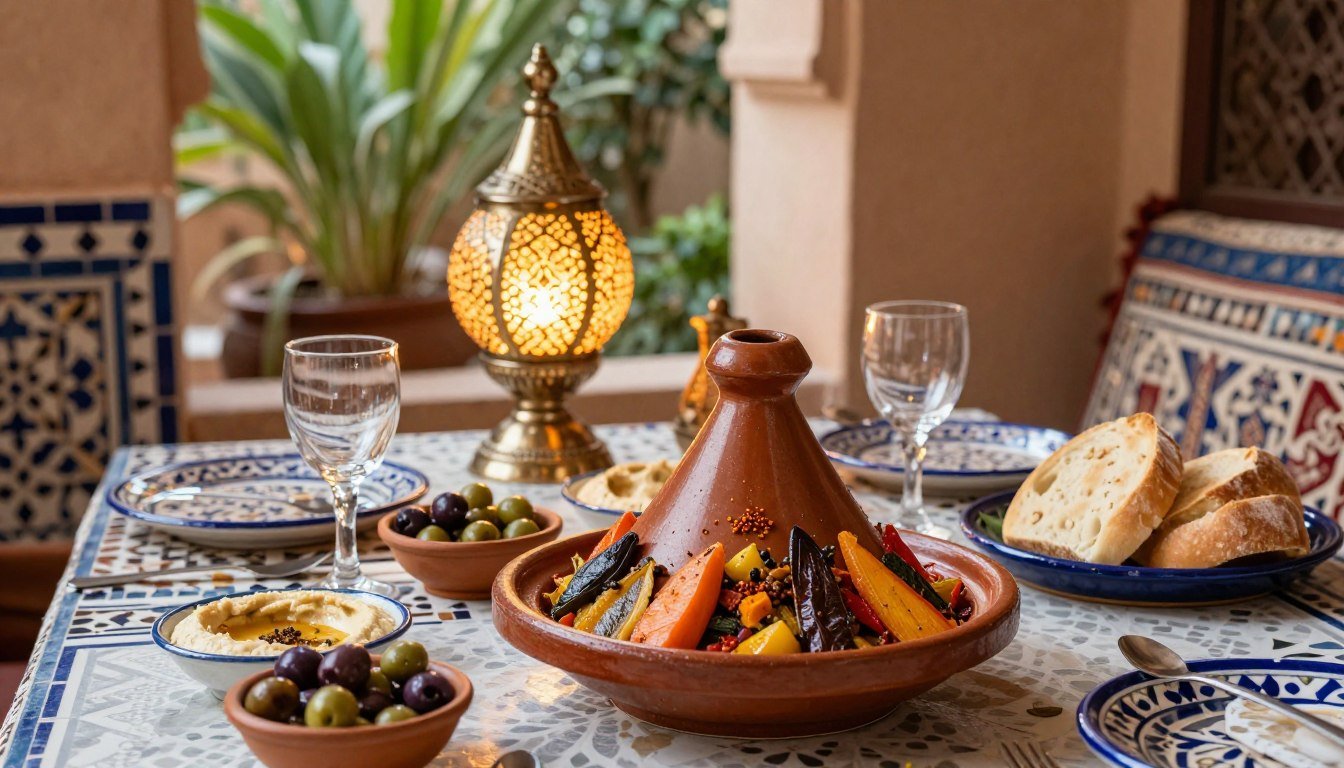
Creating a Moroccan-inspired dinner is a fun and rewarding experience. It lets you explore the rich flavors and aromas of North African cuisine.
With the right ingredients and recipes, you can take your guests on a journey to Morocco. This creates a memorable evening.
To achieve this, focus on incorporating traditional Moroccan dishes and ambiance into your dinner party.
This way, you’ll create an immersive experience. It will leave a lasting impression on your guests.
Key Takeaways
- Explore traditional Moroccan cuisine and dishes.
- Create an immersive ambiance for your dinner party.
- Use the right ingredients to achieve authentic flavors.
- Plan your menu and recipes in advance.
- Pay attention to presentation and decoration.
The Essence of Moroccan Cuisine
Moroccan cuisine is a mix of flavors from Africa, Europe, and the Middle East. This unique blend has shaped its culinary identity. It makes Moroccan food diverse and complex.
Key Flavor Profiles and Ingredients
Moroccan dishes are known for their bold tastes and smells. Key ingredients include preserved lemons, olives, and a spice mix called ras el hanout. These are mixed with meats, veggies, and grains to make tasty meals.
| Ingredient | Description | Common Use |
|---|---|---|
| Preserved Lemons | Lemons preserved in salt and their own juices | Tagines, salads |
| Ras el hanout | A blend of various spices | Meat and vegetable dishes |
| Olives | Green or black olives, often used whole or pitted | Tagines, stews |
Regional Variations in Moroccan Food
Moroccan food varies by region, showing the country’s diverse geography and culture. Coastal areas have lots of seafood, while the interior focuses on meats and grains. Knowing these differences helps you enjoy Moroccan cuisine’s complexity.
Essential Moroccan Spices and Pantry Staples
Moroccan cuisine is all about its spices and pantry staples. These ingredients create the complex flavors we love. To make Moroccan dishes at home, you need to know and get these key ingredients.
Must-Have Spice Blends
Moroccan cooking uses special spice blends for flavor. Ras el Hanout and Harissa are two must-haves.
Ras el Hanout
Ras el Hanout means “head of the shop.” It’s a mix of over 30 spices like cinnamon and cumin. This spice is used in many Moroccan dishes, from tagines to couscous.
Harissa and Other Flavor Enhancers
Harissa is a chili pepper paste that adds heat. It’s made from roasted red peppers and spices. Preserved lemons and olives also add flavor to Moroccan dishes.
Where to Source Authentic Ingredients in the US
Finding real Moroccan ingredients in the US can be tough. But, there are ways. Specialty stores and online retailers carry Moroccan spices and pantry staples. Online, you can find a wide selection shipped right to you.
| Ingredient | Possible Sources | Usage |
|---|---|---|
| Ras el Hanout | Specialty stores, Online retailers | Tagines, Couscous |
| Harissa | Middle Eastern stores, Online | Soups, Stews, Marinades |
| Preserved Lemons | Specialty stores, Online retailers | Tagines, Salads |
Kitchen Tools for Authentic Moroccan Cooking
Authentic Moroccan cooking is more than just ingredients. It also needs specific kitchen tools. Traditional dishes use special tools to get the unique flavors and textures of Moroccan cuisine.
Traditional Tagines and Modern Alternatives
A tagine is a clay pot with a conical lid for slow-cooking stews. Traditional tagines are best, but Dutch ovens work well too. For real flavor, choose a ceramic or earthenware tagine.
Other Helpful Equipment
Other tools can make your Moroccan cooking better. A couscoussier is a steamer pot for cooking couscous, a key dish in Moroccan food.
Couscousiers and Substitutes
Without a couscoussier, a large pot with a steamer basket works as a substitute. It helps make couscous fluffy.
Serving Vessels and Utensils
Moroccan food is all about vibrant presentation. Use colorful ceramics and traditional dishes to set the mood. Wooden utensils and fancy serving spoons add to the Moroccan theme of your dinner.
| Tool | Description | Modern Alternative |
|---|---|---|
| Tagine | Clay pot with conical lid for slow-cooking | Dutch oven |
| Couscoussier | Steamer pot for cooking couscous | Large pot with steamer basket |
| Serving dishes | Colorful ceramics for serving | Traditional Moroccan ceramics |
Planning Your Moroccan Dinner at Home
Planning a memorable Moroccan dinner at home needs careful thought. Moroccan food is full of rich flavors and smells, great for dinner parties. It’s important to plan your menu and timeline well.
Sample Menu Ideas for Different Occasions
Moroccan dishes fit many occasions. For a casual get-together, try Chicken Shawarma and Spiced Roasted Vegetables. For a fancy dinner, go for Beef Tagine with Couscous and Moroccan salads.
- For a festive occasion: Lamb Koftas, Vegetable Tagine, and Moroccan pastries
- For an intimate dinner: Chicken Tagine, Roasted vegetables, and Mint tea
Preparation Timeline and Organization
Make a timeline to manage your time well. Begin by preparing ingredients a day early, like marinating meats and chopping veggies. On the day of the dinner, cook the longest dishes first, like tagines and couscous.
| Task | Day Before | Day Of |
|---|---|---|
| Marinate Meats | Yes | |
| Cook Tagine | Yes | |
| Prepare Salads | Yes | |
| Cook Couscous | Yes |
Moroccan Appetizers and Starters
Starting a Moroccan food journey, you’ll find a wide range of appetizers and starters. These dishes set the meal’s tone with their unique flavors and textures. They are a true taste of Morocco.
Traditional Moroccan Salads
Moroccan salads add color and freshness to the table. Zaalouk and Taktouka are two standout salads. Each offers a special taste of Morocco.
Zaalouk (Eggplant Salad)
Zaalouk is a flavorful eggplant salad. It’s made with eggplant, tomatoes, garlic, and spices like cumin and paprika. It’s great warm or at room temperature, perfect for any time.
Taktouka (Pepper Salad)
Taktouka is a delightful salad of roasted peppers, tomatoes, garlic, and olive oil. It’s cooked to blend smoky and fresh flavors. It’s often served as a side or on bread.
Dips and Bread Recipes
No Moroccan meal is complete without dips and bread. Homemade Khobz bread and Bessara dip are must-haves. They add a special touch to the meal.
Homemade Khobz (Moroccan Bread)
Khobz is a traditional Moroccan bread. It has a crusty outside and soft inside. It’s baked in a clay oven or on a baking sheet. Enjoy it with olive oil, dips, or to scoop up dishes.
Bessara (Fava Bean Dip)
Bessara is a hearty fava bean dip. It’s flavored with garlic, cumin, and olive oil. It’s comforting and nutritious, perfect for cold months. Serve it with bread or veggies for a tasty snack.
| Appetizer | Main Ingredients | Serving Suggestion |
|---|---|---|
| Zaalouk | Eggplant, Tomatoes, Garlic, Spices | Warm or at room temperature with bread |
| Taktouka | Roasted Peppers, Tomatoes, Garlic, Olive Oil | As a side or topping for bread |
| Bessara | Fava Beans, Garlic, Cumin, Olive Oil | With crusty bread or vegetables |
Signature Moroccan Main Dishes
Moroccan dining is all about its main dishes. They have complex flavors and big portions. These dishes are the stars of celebrations, showing off Morocco’s rich food history.
Classic Tagine Recipes
Tagine is a key Moroccan dish, named after its cooking pot. The slow cooking brings out deep, rich flavors. This is what makes Moroccan food so special.
Chicken with Preserved Lemon and Olives
This tagine recipe mixes chicken with tangy preserved lemons and salty olives. It’s both tasty and fragrant. The lemons give a unique salty-sour taste that goes well with the chicken.
Lamb with Prunes and Almonds
This tagine has lamb, prunes, and almonds for a sweet and savory taste. The lamb is tender, the prunes are soft, and the almonds are crunchy. It’s a mix of textures and flavors.
Couscous Dishes
Couscous is a big deal in Moroccan food. It’s served with veggies and meats. It’s flexible and can be made for any event.
Seven Vegetable Couscous
This veggie couscous celebrates Morocco’s farming. It has carrots, zucchini, and bell peppers, all cooked just right. It’s served over fluffy couscous.
Festive Couscous with Meat
For big events, Moroccans make couscous with meat, like lamb or beef. It’s slow-cooked to blend the flavors. It’s a hearty, satisfying meal.
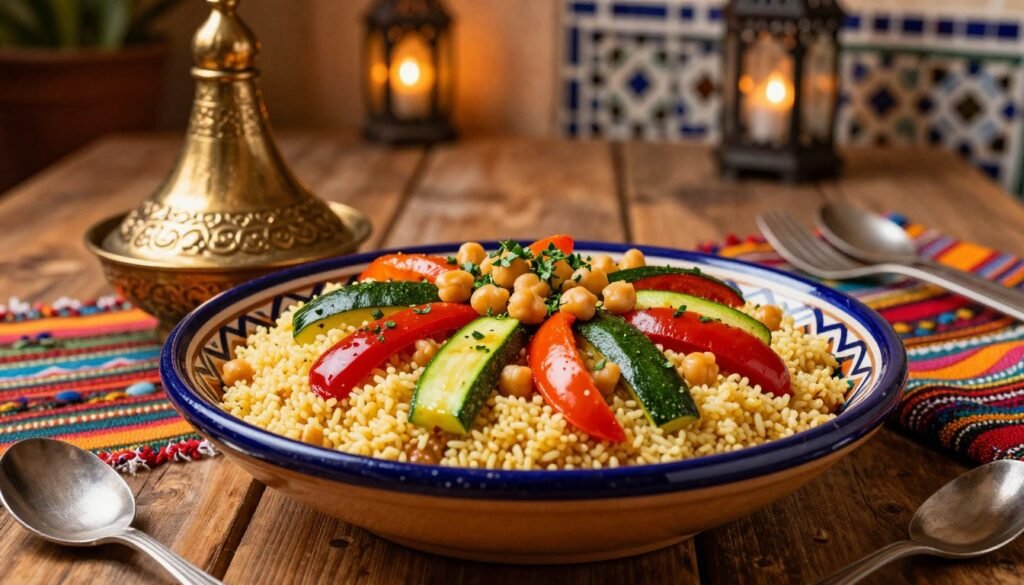
These dishes show Morocco’s deep food traditions. Whether it’s a tagine or couscous, the secret is using real ingredients and methods.
Flavorful Side Dishes and Accompaniments
Side dishes and accompaniments are key in Moroccan cuisine. They add depth and complexity to meals. These dishes complement main courses and offer a variety of textures and flavors.
Vegetable Sides
Vegetable sides are a big part of Moroccan cuisine. Roasted carrots with ras el hanout and preserved lemon are a favorite. They have a sweet and tangy taste.
Grilled or sautéed vegetables like bell peppers, zucchini, and eggplant are also popular. They’re seasoned with spices like cumin, coriander, and paprika.
Grain and Legume Accompaniments
Grain and legume accompaniments are essential in Moroccan meals. Couscous, a traditional North African dish, is a staple. It’s often served with vegetables, meat, and sauce.
Lentil salad, flavored with garlic, lemon juice, and olive oil, is another great choice. It’s nutritious and delicious.
| Side Dish | Main Ingredients | Flavor Profile |
|---|---|---|
| Roasted Carrots | Carrots, ras el hanout, preserved lemon | Sweet, tangy, spicy |
| Lentil Salad | Lentils, garlic, lemon juice, olive oil | Earthy, tangy, refreshing |
Adding these flavorful side dishes and accompaniments makes for a complete Moroccan meal.
Moroccan Desserts and Sweet Treats
Desserts are a big deal in Moroccan cuisine. They show the country’s love for sweet and spicy flavors. Moroccan desserts are rich and complex, often using honey, almonds, and spices.
Traditional Pastries
Traditional Moroccan pastries are a treat. Chebakia and Ghriba are favorites. They have intricate designs and are flavored with spices and nuts.
Chebakia (Honey Cookies)
Chebakia are honey cookies enjoyed on special days. They’re made by deep-frying dough, soaking it in honey, and adding sesame seeds. This makes them unique in taste and texture.
Ghriba (Moroccan Cookies)
Ghriba are Moroccan cookies with flavors like almonds, coconut, or chocolate. They’re loved for their crumbly texture and rich taste, enjoyed by locals and visitors alike.
Fruit-Based Desserts
Moroccan cuisine also has fruit-based desserts that are light and refreshing. These desserts use local fruits and flowers, like orange blossoms and saffron.
Orange Blossom Fruit Salad
The Orange Blossom Fruit Salad is a delightful dessert. It mixes seasonal fruits with orange blossom water. It’s tasty and beautiful, perfect for special events.
Poached Pears with Saffron
Poached Pears with Saffron is a fancy dessert. It combines poached pears with saffron’s luxurious flavor. It’s simple yet elegant, great for impressing guests.
Authentic Moroccan Beverages
Moroccan hospitality shines through its traditional drinks. These are not just refreshing but also full of flavor. Moroccan drinks are a big part of the culture. They’re often enjoyed at social events and special times.
Mint Tea Preparation and Serving Ritual
Mint tea is a favorite in Morocco. It’s known for its refreshing taste and helps with digestion. To make it, green tea leaves are steeped in hot water. Then, fresh mint leaves and sugar are added.
The way it’s served is just as special. The tea is poured high to create a frothy top. This shows hospitality and generosity.
Other Traditional Drinks
Morocco also has other traditional drinks to try. These include ones made with almonds, oranges, and avocados. Each has its own unique taste.
Almond Milk with Orange Blossom
Almond milk with orange blossom water is creamy and fragrant. It’s often served at special events. The almond milk is made by blending almonds with water and straining it. Orange blossom water adds a floral flavor.
Avocado Smoothie
The avocado smoothie is rich and creamy. It’s made by blending ripe avocados with milk or yogurt and a bit of sugar. It’s loved for its nutritional value and refreshing taste.

Creating a Moroccan Ambiance
To turn your dining area into a Moroccan oasis, focus on details and exotic decor. Emphasize elements that bring warmth and hospitality of North African culture.
Table Setting and Décor
A Moroccan-inspired table setting features rich textiles, vibrant colors, and traditional tableware. Begin with a colorful rug or tablecloth to warm up your dinner area.
Textiles and Color Schemes
Moroccan textiles are famous for bold patterns and vibrant colors. Use these in table runners, placemats, or napkin rings. Colors like rich reds, deep blues, and golden yellows are typical.
Traditional Tableware
Choose traditional Moroccan tableware, like patterned plates and ornate silverware, for authenticity. Decorate with zellij tile pieces or handmade ceramics.
Music and Lighting
The right music and lighting can make your Moroccan dinner party special. Soft, ambient lighting and traditional Moroccan music will feel like Marrakech.
Lanterns and Candles
Lanterns and candles are key for a warm, inviting atmosphere. Use lanterns with intricate metalwork or colorful glass for Moroccan flair.
Playlist Suggestions
Make a playlist with traditional Moroccan music, like Gnawa or Andalusian classical. Include modern Moroccan music to attract more guests.
Moroccan Dining Etiquette and Customs
Learning about Moroccan dining etiquette can make your dinner party feel like a real cultural event. In Morocco, hospitality is key, and how you eat is a big part of it.
Traditional Eating Practices
In Morocco, people eat with their hands, using their right hand. This is not just a tradition; it makes eating more enjoyable. Guests should use their thumb and first two fingers to pick up food, which is a bit tricky but adds to the experience.
Hosting Tips for an Authentic Experience
To host a true Moroccan dinner, focus on being generous and welcoming. Make sure your guests are happy and full. A traditional Moroccan meal has many dishes, like tagines, couscous, and salads.
| Aspect | Traditional Moroccan Practice | Hosting Tip |
|---|---|---|
| Eating Method | Eating with the right hand | Provide a finger bowl for guests to wash their hands |
| Meal Structure | Multiple courses | Plan a varied menu with several dishes |
| Hospitality | Generous serving | Encourage seconds and thirds |
Conclusion
Hosting a Moroccan dinner at home is a great way to bring North Africa’s vibrant culture to your guests. By using the rich flavors and traditions from this article, you can make a memorable night. It will feel like a real Moroccan experience.
With the right ingredients and recipes, your home can feel like Morocco. The smell of spices and the taste of slow-cooked tagines are key. Adding warm hospitality and traditional tea ceremonies makes the experience even more special.
When planning your Moroccan dinner, focus on what makes this cuisine unique. This will not only please your guests’ taste buds but also create a cozy atmosphere. It shows the true spirit of Moroccan hospitality.
In short, a well-planned Moroccan dinner at home is a great way to make a memorable evening. So, start planning your Moroccan dinner party today. Experience the magic of this incredible cuisine for yourself.