
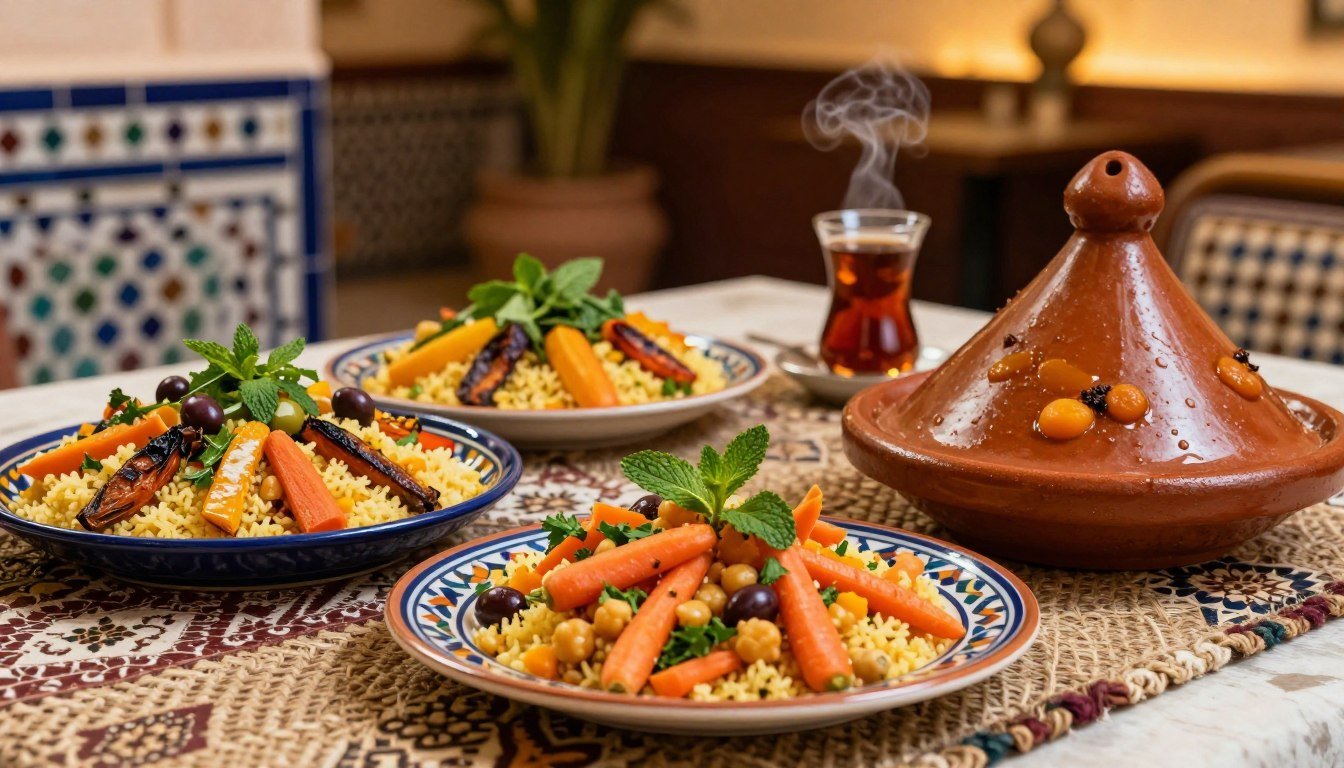
Explore the lively tastes and smells of Moroccan cuisine. Here, vegetarian recipes shine. These dishes are filled with spices, herbs, and textures, showing off the country’s rich culture.
Moroccan vegetarian dishes are incredibly diverse. You’ll find everything from thick stews to aromatic tagines. Each dish celebrates the country’s long-standing culinary traditions.
Key Takeaways
- Explore the rich flavors and aromas of Moroccan vegetarian cuisine
- Discover a variety of vegetarian recipes inspired by Moroccan culture
- Learn about the cultural significance of vegetarian dishes in Moroccan cuisine
- Get inspired to cook delicious and authentic Moroccan vegetarian meals
- Find out how to incorporate Moroccan spices and herbs into your cooking
The Rich Heritage of Moroccan Vegetarian Cuisine
Moroccan vegetarian cuisine has a deep history. It’s shaped by Morocco’s location at the crossroads of Africa, Europe, and the Middle East. This spot has allowed for the sharing of cooking methods and ingredients, making Moroccan food rich and diverse.
Historical Influences on Moroccan Food
Moroccan cuisine has been influenced by many cultures. The Berbers, Arabs, Moors, and French have all played a part. They’ve brought new ingredients and cooking ways to Morocco. The Mediterranean diet’s use of olive oil is clear, and spices from the spice trade add flavor.
The Role of Vegetables in Traditional Moroccan Cooking
Vegetables are key in Moroccan cooking. They’re found in dishes like tagines, couscous, and salads. Carrots, zucchini, and bell peppers are common, along with legumes like lentils and chickpeas. These add protein and fiber.
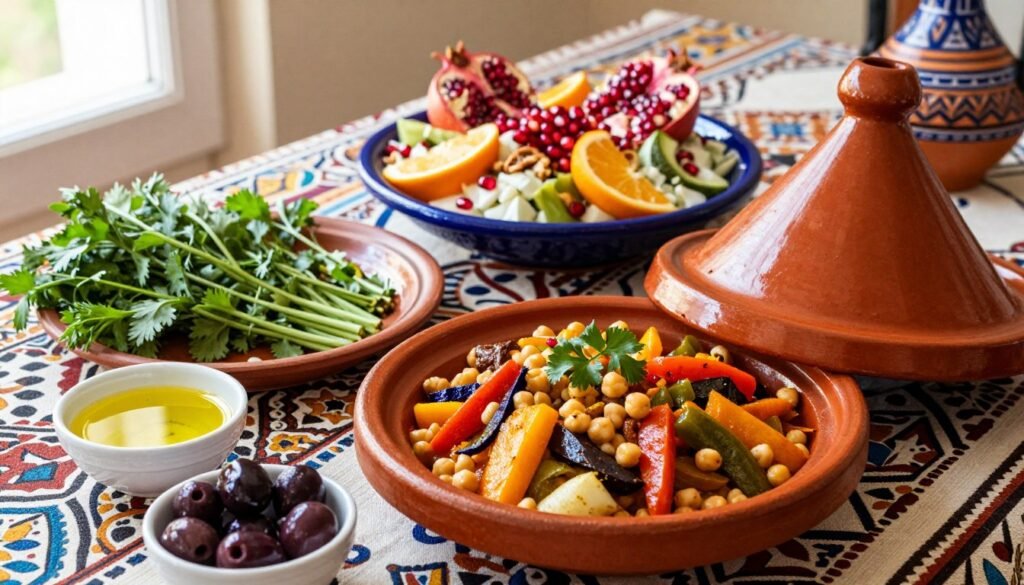
| Vegetable | Common Use in Moroccan Cuisine |
|---|---|
| Carrots | Used in salads, tagines, and as a side dish |
| Lentils | Feature in soups and stews, such as Harira |
| Zucchini | Often used in tagines and vegetable medleys |
Essential Ingredients for Authentic Moroccan Vegetarian Dishes
To make real Moroccan vegetarian dishes, knowing the key ingredients is key. Moroccan cooking’s rich tastes and smells come from spices, veggies, legumes, and pantry staples.
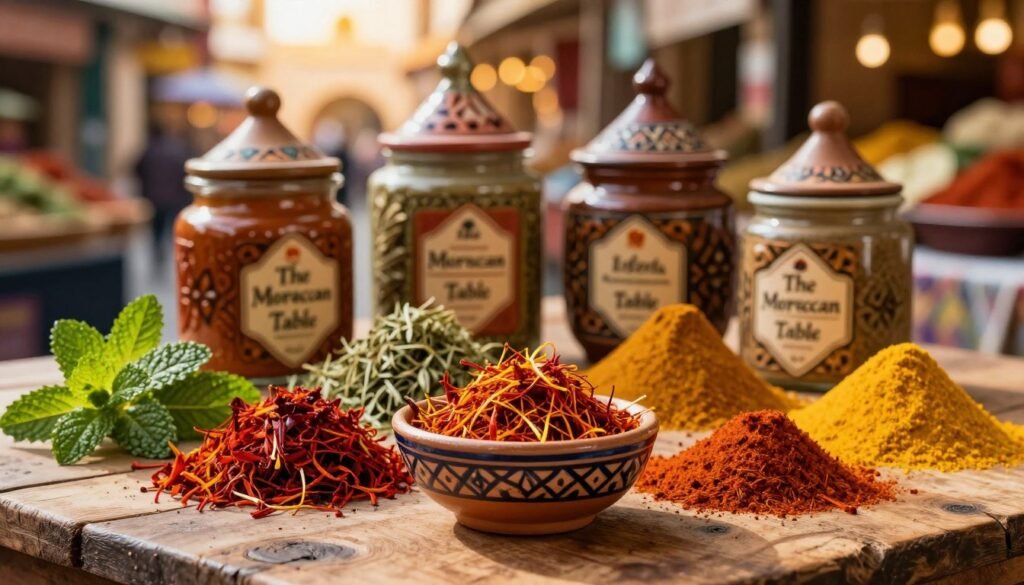
Spices That Define Moroccan Flavors
Moroccan food is famous for its spice mixes, with Ras el Hanout being a top pick. This mix, meaning “head of the shop,” has the best spices.
How to Source Quality Spices
Finding good spices is vital for true flavor. Look for trusted spice shops or online stores that focus on Moroccan spices. Check the spice’s origin and freshness when picking.
Creating Your Own Ras el Hanout Blend
Making your own Ras el Hanout lets you adjust the taste. You’ll need cumin, coriander, cinnamon, turmeric, and ginger. Try different mixes to find your perfect flavor.
Staple Vegetables and Legumes in Moroccan Cooking
Vegetables and legumes are big in Moroccan veggie dishes. You’ll often find tomatoes, bell peppers, onions, chickpeas, and lentils. They’re mixed in many ways to make tasty, filling meals.
Pantry Essentials for Moroccan Cuisine
A good pantry is a must for Moroccan cooking. You’ll need olive oil, preserved lemons, and spices. Having these items ready lets you make many traditional dishes.
| Ingredient | Common Use |
|---|---|
| Olive Oil | Cooking and dressings |
| Chickpeas | Tagines and salads |
| Preserved Lemons | Adding salty, tangy flavor |
Kitchen Tools and Equipment for Moroccan Cooking
Moroccan cooking is famous for its rich flavors and aromas. These are achieved with traditional kitchen tools and equipment. The right cookware and utensils are key to making authentic Moroccan dishes.
Traditional Moroccan Cookware
Traditional Moroccan cookware includes clay, ceramic, and metal. The tagine is the most iconic piece. It’s a clay pot with a conical lid for slow cooking stews and sauces.
To use a tagine, season it first. Rub the clay pot with oil and heat it slowly to avoid cracking. When cooking, keep the heat low and steady. This lets the ingredients simmer gently.
Claudia Roden, a famous food writer, said, “The tagine is a vessel that distributes heat evenly. It allows the food to cook slowly and absorb all the flavors.”
“The tagine is a symbol of Moroccan cuisine, and its use is deeply rooted in the country’s culinary traditions.”
Modern Alternatives for Moroccan Cooking
While traditional cookware is preferred, modern alternatives are convenient. Stainless steel and non-stick pots can replace clay tagines. Electric slow cookers are also good for stews and sauces.
But, these alternatives might change the flavor and texture of dishes slightly.
Popular Moroccan Vegetarian Dishes Step by Step
Moroccan vegetarian cooking is a world of spices, vegetables, and techniques. It’s known for its tasty dishes, often made with vegetables, legumes, and grains. We’ll explore three popular dishes, giving you step-by-step guides to make them at home.
Vegetable Tagine with Preserved Lemon
Vegetable tagine with preserved lemon is a key Moroccan dish. It’s cooked in a clay pot, which traps the flavors. This makes the dish incredibly aromatic.
Ingredient Preparation
To make vegetable tagine, start with various vegetables like carrots, zucchini, and bell peppers. Cut them into small pieces. Then, rinse and chop the preserved lemon, removing seeds.
- Chop 2 carrots and 2 zucchinis into 1-inch pieces.
- Slice 1 bell pepper into thin strips.
- Rinse and chop 1 preserved lemon.
Cooking Process
Heat 2 tablespoons of olive oil in a clay or ceramic tagine or a heavy pot. Add 1 onion, finely chopped, and sauté until softened. Then, add 2 cloves of minced garlic and cook for a minute. Add the vegetables, preserved lemon, and 1 cup of vegetable broth. Season with Moroccan spices like cumin, coriander, and paprika. Cover and simmer for 30-40 minutes, until the vegetables are tender.
Serve the vegetable tagine hot, garnished with fresh parsley or cilantro. It’s best with crusty bread or couscous to soak up the sauce.
Moroccan Couscous with Seven Vegetables
Couscous is a staple in Moroccan cuisine, often served with vegetables. The “seven vegetables” are a mix used traditionally, though the exact number can change.
Traditional vs. Quick-Cook Methods
Traditional couscous is steamed over simmering vegetables, a time-consuming process. Quick-cook couscous is a quicker alternative that still tastes great.
Step-by-Step Preparation
For traditional couscous, prepare the vegetables: chop 1 onion, 2 carrots, 1 zucchini, 1 bell pepper, and 1 tomato. In a large pot, combine these with 2 cups of vegetable broth and boil. Then, reduce the heat and simmer. Steam the couscous as instructed or in a couscous steamer.
- Prepare the vegetables as described.
- Combine the vegetables with broth in a large pot.
- Steam the couscous.
Presentation Tips
To present, mound the steamed couscous on a platter. Make a well in the center and fill it with the cooked vegetables and sauce. Garnish with fresh herbs.
Zaalouk (Eggplant and Tomato Salad)
Zaalouk is a flavorful salad made from eggplant and tomatoes, often served as a side dish.
Roasting Techniques for Perfect Eggplant
To roast eggplant, preheat your oven to 400°F (200°C). Cut the eggplant in half lengthwise, score the flesh, and drizzle with olive oil. Roast for 30-40 minutes, or until the flesh is tender.
Combining Ingredients
Once the eggplant is cool enough to handle, scoop out the flesh and chop it. Mix the chopped eggplant with diced tomatoes, garlic, olive oil, and spices. Season with salt and pepper to taste.
Serving Options
Serve zaalouk at room temperature, garnished with fresh parsley or cilantro. It’s great as a side dish or on bread.
Flavorful Moroccan Vegetarian Soups and Stews
Moroccan vegetarian cooking is rich with soups and stews. These dishes warm and comfort any meal. They’re not just tasty but also full of nutrients, making them key in Moroccan cuisine.
Harira (Moroccan Lentil Soup)
Harira is a classic Moroccan soup. It’s made with lentils, tomatoes, and spices. It’s a comforting, nutritious choice for vegetarians.
Vegetarian Adaptations of Traditional Harira
Vegetarian Harira is just as tasty as the traditional version. You can swap meat for more veggies or legumes. This makes for a hearty, fulfilling soup.
Cooking Process
To make Harira, sauté onions, garlic, and ginger in olive oil. Add lentils, tomatoes, and broth. Season with cumin, coriander, and paprika. Let it simmer until the lentils are soft.
Garnishing and Serving
Enjoy Harira hot, topped with parsley, lemon, and olive oil. This adds freshness and flavor.
Bissara (Fava Bean Soup)
Bissara is a beloved Moroccan soup. It’s made with fava beans, garlic, and olive oil. It’s simple yet flavorful, great for a chilly day.
Bean Preparation Methods
To make Bissara, soak dried fava beans overnight. Then, boil them until they’re tender. You can also use canned beans for a quicker option.
Step-by-Step Cooking Instructions
Blend cooked fava beans with garlic, olive oil, and lemon juice. Add cumin and paprika. Serve hot, topped with parsley and olive oil.
Traditional Toppings
Traditional Bissara toppings include paprika, olive oil, and lemon. You can also add fresh herbs like parsley or cilantro.
| Soup | Main Ingredients | Garnishes |
|---|---|---|
| Harira | Lentils, Tomatoes, Spices | Parsley, Lemon Wedges |
| Bissara | Fava Beans, Garlic, Olive Oil | Paprika, Olive Oil, Lemon Juice |
Harira and Bissara are great choices for vegetarians. By following these recipes, you can enjoy authentic Moroccan soups and stews at home.
Quick and Easy Moroccan Vegetarian Side Dishes
Explore the tasty world of Moroccan vegetarian side dishes. They add a North African flair to your meals. These dishes are not only delicious but also simple to make. They’re great for any day or special event.
Moroccan Carrot Salad with Cumin
The Moroccan Carrot Salad with Cumin is a healthy and tasty side. It mixes carrots’ sweetness with cumin’s warmth.
Cooking and Seasoning Techniques
To make this salad, grate carrots and sauté them with garlic and cumin. Add salt, pepper, and lemon juice for flavor.
Make-Ahead Tips
Make this salad ahead and chill it. It gets better as it sits. Just add fresh parsley before serving.
Taktouka (Roasted Pepper and Tomato Salad)
Taktouka is a colorful salad with roasted peppers and tomatoes. It’s flavored with garlic and spices. It pairs well with grilled veggies or bread.
Roasting Methods for Perfect Peppers
Roast peppers over an open flame or in the oven until they’re charred. Then, peel off the skin. This brings out their sweetness.
Balancing Flavors
Put roasted peppers with diced tomatoes, garlic, and spices. Adjust the seasoning. Add olive oil for extra flavor.
Moroccan Potato Salad
The Moroccan Potato Salad is a filling side. It mixes boiled potatoes with spices, herbs, and sometimes preserved lemon. It’s good hot or cold.
Health Benefits of Moroccan Vegetarian Dishes
Moroccan vegetarian dishes are packed with nutrients and balanced meals. Moroccan food is famous for its rich flavors and aromas. It offers many vegetarian options that taste great and are good for your health.
Nutritional Profile of Key Ingredients
Moroccan vegetarian dishes use fresh veggies, legumes, and spices. Carrots, zucchini, and bell peppers are full of vitamins and antioxidants. Legumes like lentils and chickpeas are high in protein and fiber. Spices like cumin, coriander, and turmeric add anti-inflammatory benefits.
Incorporating Moroccan Dishes into a Balanced Diet
Adding Moroccan vegetarian dishes to your diet is easy and fun. Try dishes like Vegetable Tagine or Moroccan Couscous with Seven Vegetables. They are tasty and full of nutrients. Using different spices and herbs can also boost your meal’s nutritional value without extra calories.
By choosing Moroccan vegetarian cuisine, you can enjoy a wide range of healthy meals. It focuses on whole grains, veggies, and legumes. This makes it perfect for those looking for a balanced and nutritious diet.
Tips for Mastering Authentic Moroccan Vegetarian Dishes
The secret to making authentic Moroccan vegetarian dishes is in balancing spices and layering flavors. Getting these right can take your cooking from good to great.
Balancing Spices in Moroccan Cooking
Moroccan food is famous for its mix of spices. To get the right taste, you need to know how each spice works. For example, cumin brings warmth, while cinnamon adds a sweet, woody flavor. Finding the right mix of spices is key to your own special taste.
Techniques for Layering Flavors
Layering flavors means adding ingredients at different times to build depth. Start with onions and garlic, then add spices, and finish with the main ingredients. This way, your dishes will have a rich, balanced taste.
Common Mistakes to Avoid
One big mistake is using too many ingredients, which can confuse the flavors. Another is not cooking each part for the right amount of time. This can make some parts raw or overcooked. Paying attention to these can help you cook more authentically.
Conclusion: Embracing the Vibrant World of Moroccan Vegetarian Cooking
Exploring Moroccan vegetarian cooking opens a world of rich flavors. It combines spices, vegetables, and legumes for a unique taste. Home cooks can make authentic Moroccan dishes by using key ingredients and mastering traditional techniques.
This cuisine is more than just recipes. It’s about the cultural heritage and history of each dish. You can try everything from hearty tagines to flavorful soups and salads. As you try new recipes, you’ll learn to mix flavors and balance spices.
Adding Moroccan vegetarian cooking to your kitchen can make meals more exciting. It focuses on fresh ingredients and aromatic spices, making food both healthy and tasty. Whether you’re experienced or new to cooking, Moroccan vegetarian cooking welcomes you to explore and enjoy its rich flavors.