
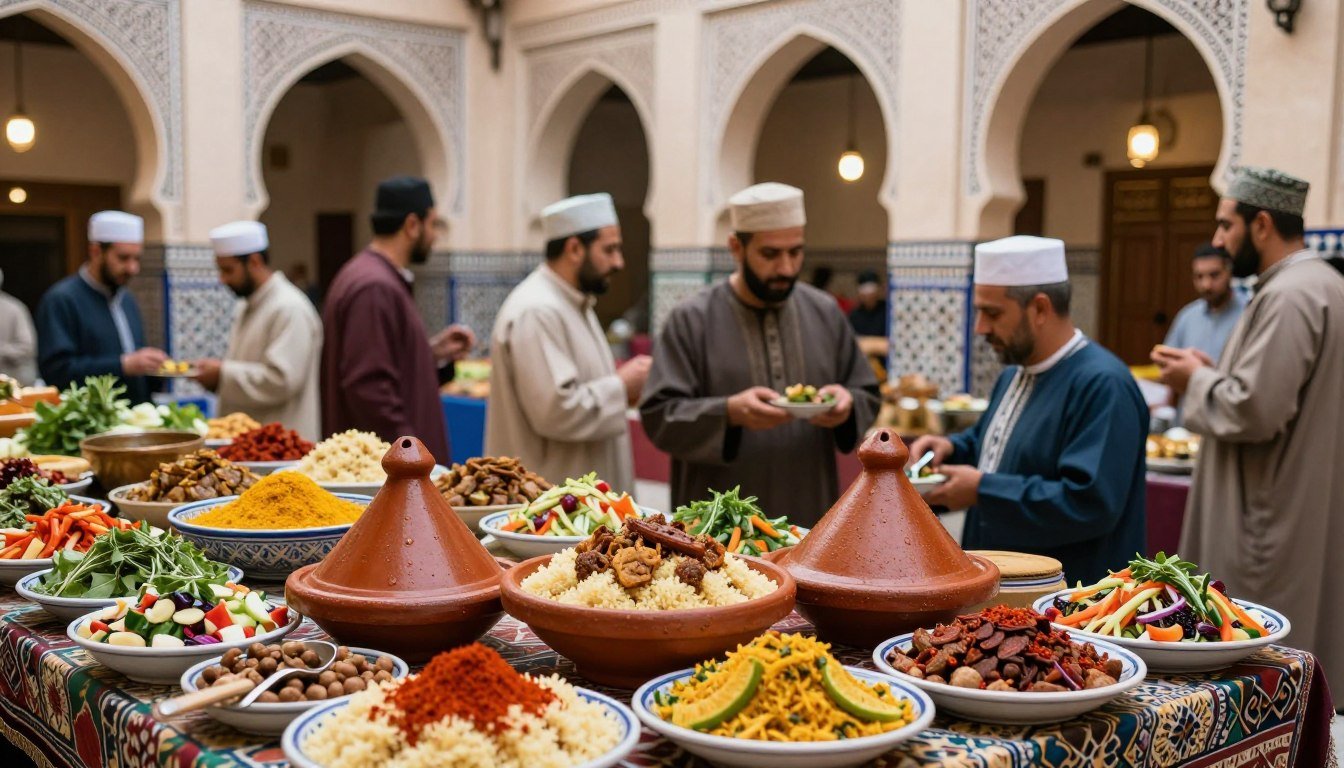
Moroccan cuisine is a mix of many cultures. It includes Arab, Mediterranean, and African influences.
The cultural significance of this cuisine goes beyond cooking. It shows the country’s diverse heritage and centuries-old traditions.
Moroccan cuisine is known for its unique spices and flavors. It has become a favorite around the world.
Key Takeaways
- Moroccan cuisine is shaped by its cultural heritage.
- The cuisine reflects the country’s diverse influences.
- Culinary traditions play a significant role in Moroccan culture.
- Moroccan cuisine has gained global recognition.
- The cuisine is characterized by its rich flavors and spices.
The Origins and Moroccan Cuisine History
Moroccan cuisine has deep roots in its location at the crossroads of Africa, Europe, and the Middle East. This spot has allowed for the exchange of goods, ideas, and cooking methods for centuries. It has shaped the country’s rich food heritage.
Ancient Berber Influences on Modern Dishes
The Berber communities have left a lasting mark on Moroccan food. Their old ways of preserving food, like salting and drying, still shape today’s cooking. Berber cuisine uses local foods like olives, dates, and grains, which are still key in Moroccan cooking.
Arab and Mediterranean Contributions
The Arabs brought new ingredients and cooking ways to Morocco, including saffron and cumin. The Mediterranean diet, with its olive oil, citrus, and veggies, also shaped Moroccan food. These influences mixed with local traditions to create Moroccan dishes’ unique tastes.
How the Spice Trade Shaped Flavor Profiles
Morocco’s role in the spice trade brought in spices like cinnamon, ginger, and turmeric. The spice trade added new flavors and helped create spice blends like Ras el hanout. These spices have made Moroccan food’s flavors both unique and aromatic.
How to Identify and Use Key Ingredients of Moroccan Cooking
To truly experience Moroccan cuisine, it’s essential to understand and identify the key ingredients. Moroccan cooking is known for its diverse ingredients. These include spices, herbs, grains, and legumes, which are mixed to create its signature dishes.
Essential Spices and Herbs: A Buying Guide
Moroccan cuisine heavily relies on spices and herbs for its flavors. Common spices are cumin, coriander, cinnamon, and turmeric. Herbs like parsley, cilantro, and mint add freshness. It’s important to choose high-quality, fresh ingredients for the best flavor.
Working with Staple Grains and Legumes
Grains and legumes are key in Moroccan cooking. Grains like couscous and barley are staples. Legumes such as lentils, chickpeas, and fava beans are used in many dishes. Knowing how to prepare and cook these ingredients is crucial for authentic Moroccan meals.
Incorporating Traditional Fruits and Vegetables
Moroccan cuisine also uses a wide range of fruits and vegetables. Ingredients like preserved lemons, olives, and vegetables like carrots, zucchini, and bell peppers are used. Adding these ingredients can enhance your dishes, making them more authentic.
The Art of Spice Blending: Creating Authentic Moroccan Flavors
Moroccan cuisine is all about the art of spice blending. This skill has been passed down for generations. It’s not just about mixing spices; it’s about finding the perfect balance of flavors.
Step-by-Step Guide to Making Ras el Hanout
Ras el Hanout, or “head of the shop,” is a mix of up to 30 spices. Start with cumin, coriander, cinnamon, ginger, and cardamom. Combine these spices in a specific ratio to get the right flavor.
| Spice | Quantity (in grams) |
|---|---|
| Cumin | 20 |
| Coriander | 15 |
| Cinnamon | 10 |
| Ginger | 5 |
| Cardamom | 5 |
Crafting the Perfect Chermoula Marinade
Chermoula is a marinade made from herbs, oil, and lemon juice. To make it, mix chopped parsley, cilantro, garlic, and lemon zest with olive oil and lemon juice. The key is to find the right balance between fresh herbs and tangy lemon.
How to Balance Sweet and Savory Elements
In Moroccan cuisine, balancing sweet and savory is key. Start by identifying the natural sweetness or savory flavor in your ingredients. Then, adjust your spice blends to balance the flavors.
Measuring Techniques for Consistent Results
Consistency is crucial in spice blending. Use a digital scale to measure your spices accurately. This ensures your blends always taste the same.
Storage and Shelf Life Tips
Keep your spice blends in airtight containers in a cool, dark place. They can last up to 6 months this way. Label your containers with the date and contents to keep track of freshness.
Mastering Traditional Cooking Techniques
Moroccan cooking is all about ancient techniques that make its dishes special. These methods have been perfected over centuries. They add unique flavors and textures to Moroccan food.
Tagine Cooking: A 5-Step Method
Tagine cooking is a key part of Moroccan cooking. It uses a clay pot with a conical lid. This setup helps steam circulate and keeps moisture in. Here’s how to cook a tagine:
- Prepare your ingredients, including meat, vegetables, and spices.
- Layer the ingredients in the tagine pot, starting with a base of aromatics.
- Add the main ingredients, ensuring they are covered with a sufficient amount of liquid.
- Cover the tagine with its lid and cook over low heat.
- Allow the dish to simmer for at least an hour, enabling the flavors to meld together.
Slow Cooking Secrets for Maximum Flavor
Slow cooking is key for deep flavors in Moroccan dishes. Browning the meat first adds richness. Starting with spices and aromatics sets the flavor base.
Traditional Bread Making Process
Making traditional Moroccan bread is an art. It starts with mixing flour, water, yeast, and salt. The dough is kneaded until smooth and elastic. After fermentation, it’s shaped and baked in a hot oven.
Common Mistakes to Avoid
A common mistake is not fermenting the dough long enough. This makes the bread dense. Overworking the dough also results in a tough texture.
Adapting Techniques for Modern Kitchens
Traditional techniques are vital but can be adapted for today’s kitchens. Using a slow cooker mimics tagine cooking without a clay pot. A stand mixer can also help with kneading dough.
By learning these traditional techniques and using modern tools, anyone can make authentic Moroccan dishes at home.
How to Prepare Iconic Moroccan Dishes
Moroccan cuisine is famous for its rich flavors and iconic dishes. You can make these dishes at home with the right ingredients and methods.
Couscous Preparation: From Basic to Festive
Couscous is a key dish in Moroccan cuisine, often enjoyed on special days. To make basic Couscous, steam it over boiling water using a Couscoussier. For a festive touch, add vegetables, meats, or dried fruits while steaming.
Tips for perfect Couscous: Choose the right Couscous for your dish. Make sure it’s not overcooked. Fluffing it with a fork after steaming helps separate the grains.
Three Essential Tagine Recipes
Tagine is a slow-cooked stew cooked in an earthenware pot. Here are three must-try Tagine recipes:
- Chicken Tagine with Preserved Lemons and Olives: A classic mix of tangy preserved lemons and rich chicken.
- Beef Tagine with Prunes: A sweet and savory dish, perfect for those who love a mix of flavors.
- Vegetarian Tagine: A hearty mix of vegetables, great for a meatless day.
Pastilla: Step-by-Step Assembly Guide
Pastilla is a savory pie with layers of flaky Phyllo dough, filled with meat, onions, and spices. Assembling it requires patience and skill.
Working with Phyllo Dough
To work with Phyllo dough, thaw it as instructed. Layer it with melted butter or oil to keep it moist.
Filling Variations and Techniques
The filling is where you can get creative with Pastilla. Traditional fillings include chicken or pigeon, but you can also use beef or vegetables. Spices and herbs like cumin, coriander, and parsley add depth to the filling.
Tip: Season your filling well, as Phyllo dough can be quite bland on its own.
Performing the Moroccan Tea Ceremony
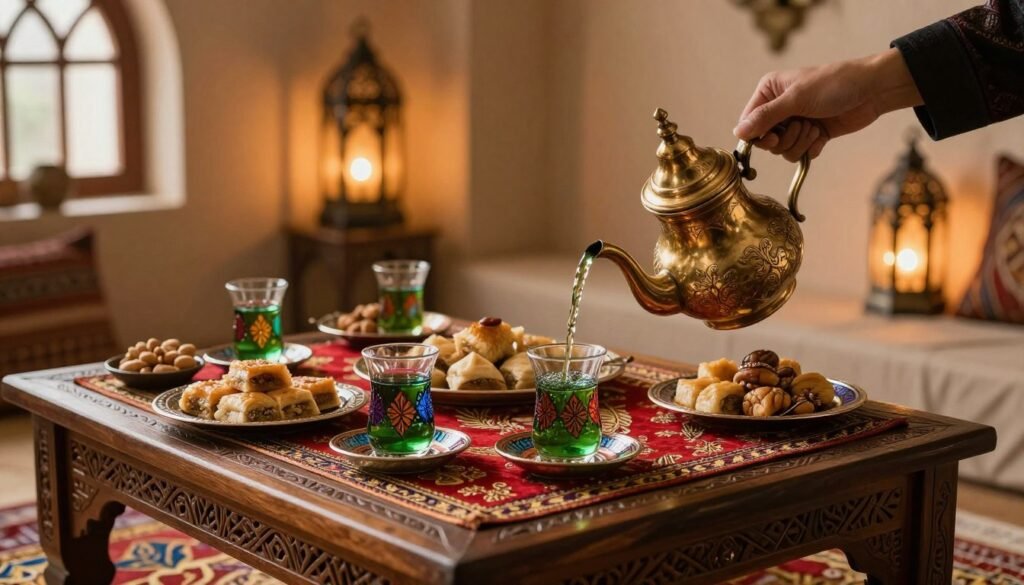
In Morocco, tea is more than a drink; it’s a sign of friendship and respect. The Moroccan tea ceremony is a cherished tradition. It shows the country’s rich culture and warm hospitality.
The 7-Step Mint Tea Preparation Process
Preparing Moroccan mint tea is an art with a specific order:
- Select high-quality green tea leaves.
- Rinse the tea leaves with boiling water.
- Add fresh mint leaves to the tea pot.
- Mix in sugar to taste.
- Pour the tea from a height to create a frothy texture.
- Serve the tea in small glasses.
- Garnish with additional fresh mint if desired.
Tea Service Etiquette for Hosts
When serving tea, hosts in Morocco follow certain rules. Always serve tea with the right hand, as using the left is seen as rude. It’s also important to serve tea in a specific order, starting with the most honored guest.
Sourcing Authentic Tea Equipment
To make the Moroccan tea ceremony at home, you need the right equipment. Look for traditional tea pots, called “berrada,” and small, decorative glasses. You can find these items in specialty stores or online, where they sell Moroccan or Middle Eastern goods.
How to Adapt Regional Moroccan Recipes
Moroccan cuisine is a mix of many flavors from different regions. To make these recipes, you need to know the cooking ways of each area. Morocco’s varied landscapes, from coast to mountains and deserts, bring unique ingredients and cooking styles to its food.
Coastal Dishes: Seafood Selection and Preparation
The coastal areas of Morocco are famous for their fresh seafood. Grilling and frying are top ways to cook fish and seafood. To make these dishes, pick the freshest seafood and add olive oil, garlic, and herbs for extra taste.
Mountain and Desert Cooking Methods
In the mountains, slow-cooking is key, often in clay pots or tagines. This method makes meat tender and blends flavors well. In the deserts, dried fruits and nuts are used, adding sweetness and texture.
Translating Urban vs. Rural Techniques for Home Cooks
Urban Moroccan cooking mixes many ingredients and methods, showing the city’s cultural mix. Rural cooking is simpler, using local ingredients and old ways. Home cooks can mix these styles by knowing the main ingredients and methods and using them in their cooking.
Food anthropologist notes, “The art of Moroccan cooking is not just about ingredients, but also technique and culture.” This shows how important it is to know the regional differences when making Moroccan dishes.
“The diversity of Moroccan cuisine is its greatest strength, offering a wealth of flavors and techniques that can be adapted and enjoyed in kitchens around the world.”
By exploring these regional differences and techniques, home cooks can make real Moroccan dishes. These dishes show the rich food heritage of Morocco.
Setting Up Your Kitchen for Moroccan Cooking
To cook like a pro in Morocco, you need the right kitchen tools and ingredients. Start by stocking up on essential cookware, utensils, and pantry staples.
Essential Cookware and Utensils Checklist
For Moroccan cooking, you’ll need a tagine pot, clay or ceramic dishes, and a couscous steamer. Don’t forget a mortar and pestle, wooden spoons, and a slotted spoon.
- Tagine pot
- Couscous steamer
- Mortar and pestle
- Wooden spoons
- Slotted spoon
Building a Moroccan Pantry: 10 Must-Have Items
A Moroccan pantry should have staples like olive oil, preserved lemons, and spices. Here are 10 must-haves:
- Olive oil
- Preserved lemons
- Ras el hanout
- Cumin
- Coriander
- Cinnamon
- Ginger
- Turmeric
- Chermoula
- Couscous
Where to Find Authentic Ingredients in the United States
Finding real Moroccan ingredients can be tough. But, there are a few ways to get them. Look online or visit stores that sell international or Middle Eastern products.
Online Resources and Specialty Stores
Amazon and Whole Foods often have international ingredients. Middle Eastern or African grocery stores also have authentic products.
Acceptable Substitutions for Hard-to-Find Items
Can’t find some ingredients? No worries. You can use substitutes. For example, lemon juice and salt can replace preserved lemons.

Conclusion: Embracing the Spirit of Moroccan Culinary Traditions
Moroccan cuisine is a mix of history, culture, and traditions. By learning about its origins, home cooks can make authentic, tasty dishes. Essential spices, herbs, and cooking techniques all add to Moroccan food’s unique taste.
Embracing Moroccan cuisine is more than just cooking. It’s about the joy of sharing meals and building community. Adding Moroccan dishes to your cooking means you’re part of a long-standing tradition. Whether it’s a tagine or a tea ceremony, you’re connecting with centuries of culture.
By diving into Moroccan culinary traditions, you’ll improve your cooking and appreciate the culture more. Exploring the flavors and techniques in this article will help you create unforgettable meals. These meals will celebrate the beauty of Moroccan cuisine.