
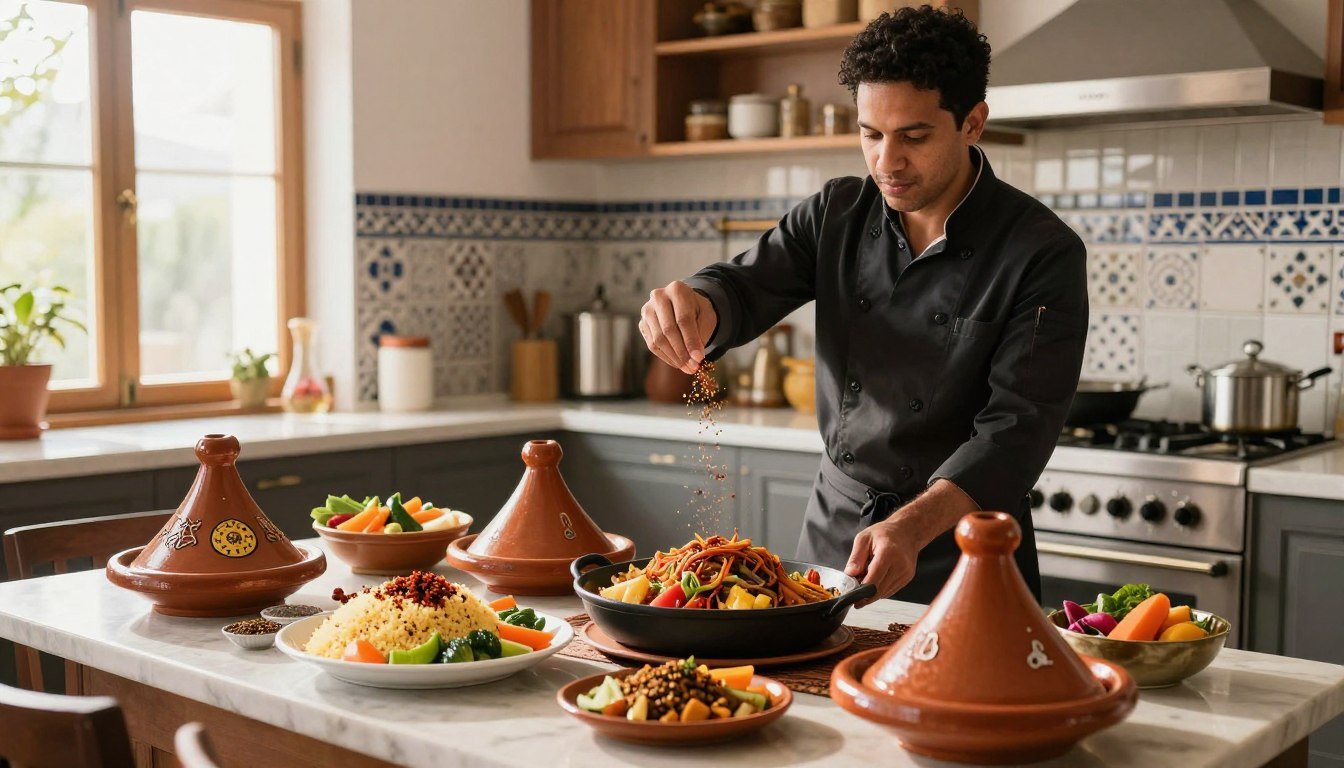
Traditional Moroccan cuisine is famous for its deep flavors and smells. These are often made possible by complex cooking methods and rare spices. As cooking styles change, updating these traditional tastes with modern cooking methods can give old dishes a new spin.
By using new cooking techniques, like faster methods and creative mix-ins, cooks can enjoy traditional Moroccan cuisine in a new way. This mix keeps the cultural heart of Moroccan cooking alive. It also makes it easier and quicker for cooks today.
Key Takeaways
- Understand the core flavors and techniques of traditional Moroccan cuisine.
- Learn how to adapt these flavors to modern cooking methods.
- Discover innovative ingredient combinations that enhance traditional dishes.
- Explore quicker cooking techniques that preserve the essence of Moroccan cooking.
- Make traditional Moroccan recipes more accessible and convenient for modern home cooks.
Understanding Traditional Moroccan Cuisine
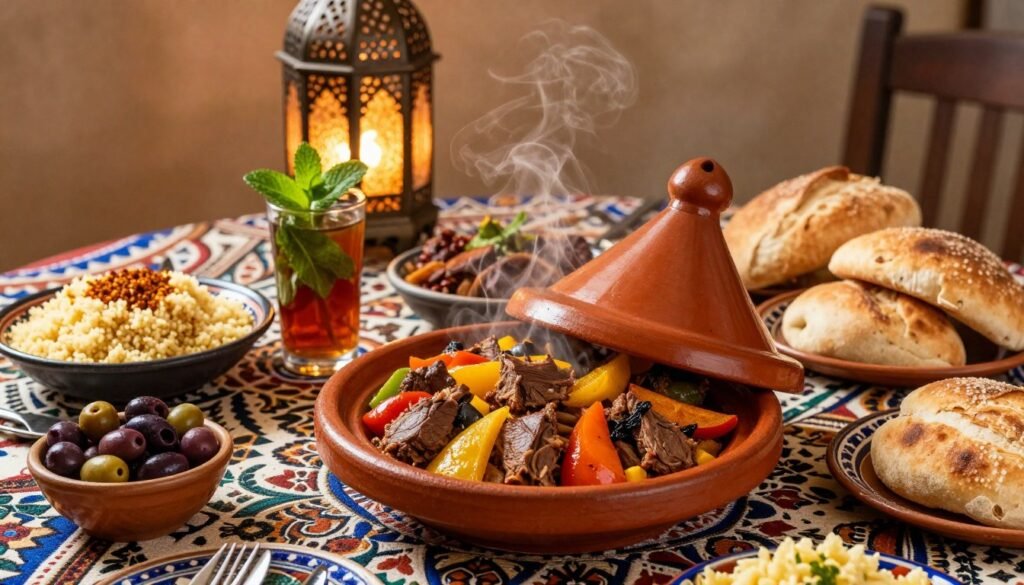
Traditional Moroccan cuisine is a mix of Berber traditions and outside influences. This blend has been shaped by centuries of cultural exchange and historical events.
The Historical Influences on Moroccan Food
Moroccan cuisine has been shaped by many cultures. These include Berber, Arab, Mediterranean, and French. Each has added to the rich variety of Moroccan cooking.
Berber, Arab, Mediterranean, and French Influences
The Berber people introduced preserved lemons and olives. Arab traders brought exotic spices. Mediterranean and French influences added new cooking techniques and ingredients.
- Berber traditions: Use of local ingredients and preservation methods
- Arab influences: Introduction of spices like cumin and coriander
- Mediterranean and French influences: Use of olive oil and sophisticated cooking techniques
The Spice Trade’s Impact on Moroccan Flavors
The spice trade greatly influenced Moroccan cuisine. It introduced many spices that are now key to traditional dishes.
Key Characteristics of Authentic Moroccan Cooking
Authentic Moroccan cooking is known for aromatic spices and slow cooking. It also combines sweet and savory flavors. These are seen in dishes like tagines and couscous.
Regional Variations Within Morocco
Morocco’s different regions have their own unique dishes. Coastal areas use more seafood, while inland focuses on meat and vegetables.
Essential Moroccan Ingredients and Their Modern Substitutes
Adapting Moroccan recipes to modern cooking means knowing the key ingredients and their substitutes. Moroccan food is famous for its deep flavors. These come from aromatic spices and special ingredients.
Spices: Finding the Right Balance
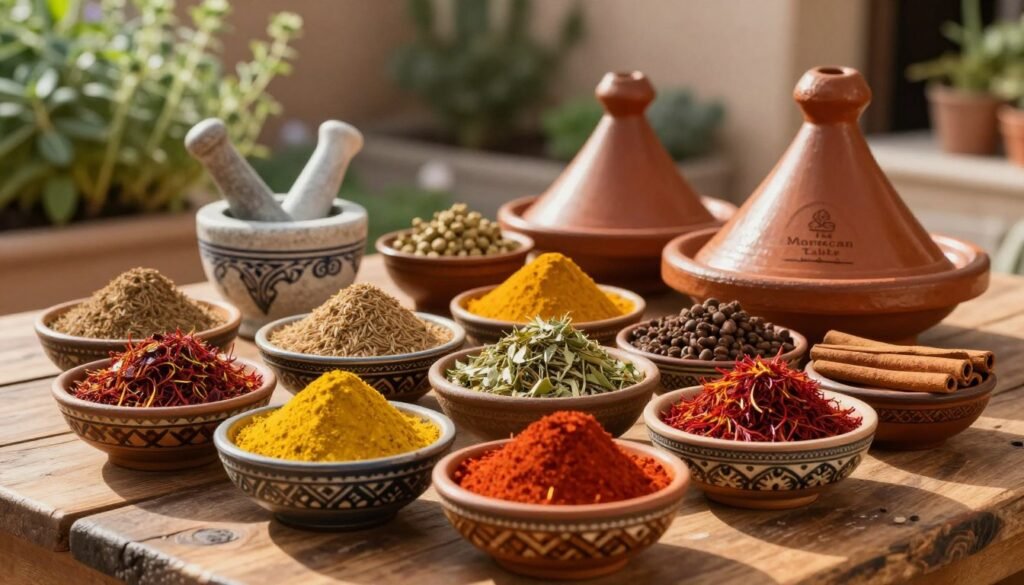
Moroccan spices are crucial, with Ras el Hanout being a key blend. This mix, called “head of the shop,” has up to 30 spices.
Building Your Moroccan Spice Cabinet
You’ll need basic spices like cumin, coriander, cinnamon, and ginger to start. Then, add unique spices like sumac and ras el hanout to your collection.
Making Ras el Hanout at Home
Making your own Ras el Hanout lets you adjust the flavor. A basic mix includes cumin, coriander, cinnamon, and cardamom.
Preserved Lemons and Modern Alternatives
Preserved lemons add a salty, tangy taste to Moroccan dishes. If you can’t find or prefer not to use them, try pickled lemons or lemon zest with salt.
Sourcing Authentic Ingredients in American Markets
Finding Moroccan ingredients in American markets can be tough. But, you can find them in specialty stores or online. Middle Eastern or North African markets are perfect for authentic ingredients like preserved lemons and specific spices.
By learning about and adapting these Moroccan ingredients, you can bring Moroccan flavors into your kitchen. This makes traditional recipes more accessible while keeping their true taste.
Traditional Cooking Methods vs. Modern Techniques
Modernizing Moroccan cooking doesn’t mean losing its true spirit. Traditional methods are key to Moroccan cuisine. Yet, modern tools can make cooking easier without losing the dish’s essence.
From Tagine to Instant Pot: Adapting Cooking Vessels
The traditional Moroccan tagine is a clay pot with a conical lid. It’s used for slow cooking over low heat. This method makes dishes tender and flavorful but can be slow and needs constant watch.
Modern alternatives like the Instant Pot can cook dishes fast. They can make tagine-style dishes in less time.
Slow Cooking Alternatives for Busy Schedules
Busy people can use slow cookers and Instant Pots. These appliances cook food for hours without needing to watch. They’re great for making dishes like chicken tagine or beef stew.
Maintaining Authentic Flavors with Modern Equipment
Adapting traditional Moroccan recipes to modern methods can be tricky. It’s all about keeping the true flavors. The slow cooking in a tagine blends spices and tenderizes meat well. Modern pressure cookers can do the same but faster.
Pressure Cooker Conversion Guidelines
| Traditional Cooking Time | Pressure Cooker Time | Notes |
|---|---|---|
| 2-3 hours | 30-45 minutes | Reduce liquid by 25% |
| 1-2 hours | 20-30 minutes | Check for tenderness |
| 30 minutes – 1 hour | 10-20 minutes | Adjust seasoning as needed |
Air Fryer Applications for Moroccan Dishes
The air fryer is great for Moroccan dishes. It cooks vegetables and meats quickly. You can make crispy zaalouk (eggplant stew) or b’stilla (meat pie) in it.
Essential Kitchen Equipment for Modern Moroccan Recipes
Moroccan cuisine is famous for its rich flavors. The right kitchen tools can make cooking easier. Modern Moroccan cooking blends old techniques with new tools.
Must-Have Tools for Authentic Results
Some tools are key for true Moroccan tastes. A tagine is a must-have, with its special lid for slow cooking. But, if you don’t have space or prefer not to use a tagine, a Dutch oven or slow cooker works well too.
Budget-Friendly Equipment Alternatives
You don’t need to spend a lot to cook Moroccan dishes. For example, an Instant Pot can cook fast, saving time on long simmering dishes. Here’s a look at some common kitchen tools and their cheaper options:
| Specialized Equipment | Budget-Friendly Alternative |
|---|---|
| Tagine | Dutch Oven or Slow Cooker |
| Instant Pot | Pressure Cooker |
| Mortar and Pestle | Spice Grinder |
Multi-Purpose Appliances That Work for Moroccan Cooking
Some appliances are great for different parts of Moroccan cooking. A food processor can make spice blends, chop veggies, or even couscous. Buying such versatile appliances can make cooking Moroccan dishes easier.
Simplifying Complex Moroccan Recipes Without Losing Authenticity
Making Moroccan recipes easier for home cooks doesn’t mean losing their true taste. We can use smart ways to make cooking simpler without losing the dish’s heart and soul.
Streamlining Multi-Step Processes
Many Moroccan recipes have lots of steps, like making spice blends and cooking meats slowly. By focusing on the most important steps, we can make these recipes quicker. For example, using pre-ground Ras el hanout spice mix saves time without changing the taste much.
Time-Saving Preparation Techniques
Moroccan cooking often needs prep work, like marinating meats or soaking legumes. Using quick techniques can make cooking faster. For example, a pressure cooker can cut down cooking time for tagines a lot.
Make-Ahead Components for Quick Assembly
Preparing parts of Moroccan dishes ahead of time makes cooking quicker. This includes making spice blends, chopping veggies, and marinating meats. Having these ready lets cooks quickly put meals together and cook them.
Strategic Shortcuts That Preserve Flavor
While keeping things authentic is important, some shortcuts can keep Moroccan dishes’ flavors intact. Using store-bought preserved lemons or pre-made harissa saves time. These shortcuts let home cooks enjoy complex flavors without spending hours preparing.
Batch Cooking and Freezing Moroccan Dishes
Batch cooking is a great way to make meal prep easier. Many Moroccan dishes, like stews and tagines, freeze well and can be reheated later. Batch cooking and freezing save time and make sure home cooks can enjoy authentic Moroccan meals whenever they want.
By using these strategies, home cooks can enjoy Moroccan cuisine’s rich flavors without the hassle. This makes it easier to cook Moroccan dishes every day.
Creating Modern Moroccan Recipes for Everyday Meals
Turning traditional Moroccan recipes into modern dishes is a fun journey. You can mix new cooking methods and ingredients. This way, you can make tasty Moroccan meals for any day.
Weeknight-Friendly Tagine Adaptations
Tagine is a key dish in Moroccan cooking, but it takes time. To make it quicker for weeknights, try using a slow cooker or Instant Pot. These tools cut down cooking time without losing flavor.
- Use pre-cut veggies to save time.
- Choose quick-cooking meats like chicken or beef.
- Try new spice mixes for interesting flavors.
Quick Moroccan-Inspired Salads and Sides
Moroccan salads and sides are easy to make fast. Adding preserved lemons, olives, and fresh herbs gives them a Moroccan touch.
- Make a simple salad with mixed greens, cherry tomatoes, and a preserved lemon dressing.
- Quickly cook couscous with veggies and a light dressing.
- Roast veggies with Moroccan spices for a tasty side.
Fusion Dishes That Honor Moroccan Flavors
Fusion cooking lets you mix Moroccan tastes with others. This creates new and tasty dishes.
Moroccan-Mediterranean Crossover Dishes
Mixing Moroccan spices with Mediterranean foods makes great fusion dishes. For example, Moroccan grilled lamb skewers with a Greek salad are a hit.
American Classics with Moroccan Twists
You can also add Moroccan flavors to American favorites. Like adding ras el hanout to a burger for a unique taste.
Exploring these modern twists and fusions brings Moroccan flavors to your daily meals. It makes cooking fun and easy.
Adapting Moroccan Recipes for Dietary Restrictions
Moroccan recipes can be modified to fit different diets without losing their flavor. This makes it possible for everyone to enjoy Moroccan food, no matter their dietary needs.
Vegetarian and Vegan Versions of Classic Dishes
Traditional Moroccan dishes can be changed to be vegetarian or vegan. For instance, the famous tagine can be made without meat by using vegetables or legumes. Adding chickpeas or lentils not only makes it vegetarian but also boosts fiber and nutrients.
To make a vegan tagine, swap honey for maple syrup and use plant-based oil instead of butter. These changes make Moroccan food vegan-friendly.
Gluten-Free Moroccan Cooking
Moroccan food is great for those who can’t eat gluten. Couscous, a key dish, is made from wheat and has gluten. But, you can use gluten-free couscous made from corn or rice instead.
Other gluten-free choices include rice, vegetable, and meat dishes. It’s important to check that spices and ingredients are gluten-free. Many Moroccan dishes are naturally gluten-free, making them easy to adapt.
Low-Carb and Keto-Friendly Adaptations
Moroccan food can also be made for low-carb or keto diets. By cutting down on carbs like couscous and focusing on veggies, meats, and healthy fats, you can make dishes keto-friendly.
For example, a keto chakchouka can be made by using more veggies and meat, and skipping bread. Using cauliflower rice instead of regular rice is another way to make dishes lower in carbs.
Common Challenges and Solutions When Adapting Moroccan Recipes
One big challenge in cooking Moroccan dishes is finding a balance. It’s between keeping the recipe true to its roots and making it easy to cook today. With some smart strategies, you can overcome this hurdle.
Balancing Authenticity with Convenience
Moroccan food is famous for its bold flavors and spice mixes. To make it easier, try using pre-ground spices or pre-preserved lemons. These shortcuts save time without losing much flavor.
Adjusting Spice Levels for American Palates
Moroccan dishes often pack a spicy punch. If you’re not used to spicy food, start by using less chili peppers or spices. You can always add more if you want.
Troubleshooting Texture and Consistency Issues
Texture and consistency are key in any dish. Problems like dry couscous or tagine sauce that’s too thin or thick can be a letdown.
Fixing Dry Couscous Problems
Dry couscous usually comes from using too little water or steaming it wrong. To fix it, use the right water ratio and steam it right. Fluffing it with a fork can also help.
Achieving the Perfect Tagine Sauce Consistency
Tagine sauce should be thick and rich. To get it right, simmer it slowly to thicken it. Or, mix flour and water to thicken it up.
| Issue | Solution |
|---|---|
| Dry Couscous | Adjust water ratio, steam properly, fluff with fork |
| Tagine Sauce Too Thin | Simmer to reduce, use flour slurry to thicken |
| Too Spicy | Reduce chili peppers or spicy spices |
Conclusion: Honoring Tradition While Embracing Innovation
Adapting traditional Moroccan recipes for today’s cooking is a careful dance. It’s about keeping the rich heritage alive while adding new twists. Home cooks can make modern Moroccan dishes that honor the past and fit today’s life.
Exploring Moroccan cuisine means more than just changing ingredients or using new gadgets. It’s about grasping the heart of traditional cooking and the tastes it brings. Innovating in Moroccan cooking is about finding the right mix of new and old.
We’ve seen how to make complex recipes simpler, adapt to different diets, and solve common problems. This way, cooks can enjoy Moroccan flavors and aromas in their daily meals. The mix of tradition and innovation makes modern Moroccan recipes both exciting and tasty.