
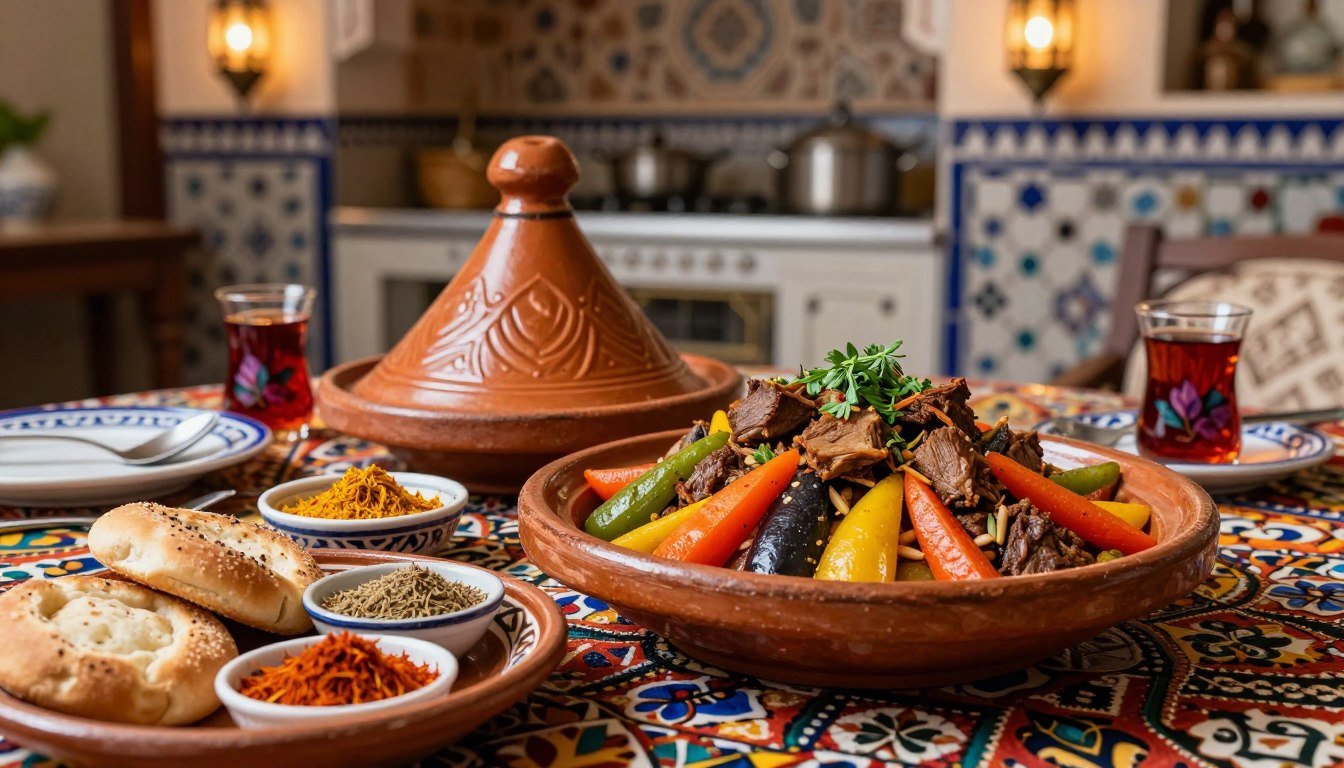
Moroccan cuisine is a mix of many flavors. It’s shaped by Morocco’s location at the crossroads of the Mediterranean and Africa.
Traditional Moroccan flavors have evolved over centuries. They blend Arab, Berber, and Mediterranean cuisines into a unique taste.
The art of Moroccan cooking is about mixing complex spices and ingredients. This creates dishes that smell and taste amazing.
By using traditional flavors and modern cooking methods, home cooks can make Moroccan dishes every day.
Key Takeaways
- Moroccan cuisine is a blend of Arab, Berber, and Mediterranean flavors.
- Traditional Moroccan dishes are known for their complex spice blends.
- Modern Moroccan cooking combines heritage with contemporary practices.
- Key ingredients include preserved lemons, olives, and spices.
- Moroccan cooking emphasizes balance and harmony in flavors.
The Rich Heritage of Moroccan Cuisine
Moroccan cuisine has a long history of cultural exchange and innovation. It has been shaped by many influences, making it unique.
Berber, Arab, and Mediterranean Influences
The Berber influence is seen in the use of local ingredients and cooking methods. The Arab influence brought in spices and dishes. The Mediterranean influence added richness with olives and citrus fruits.
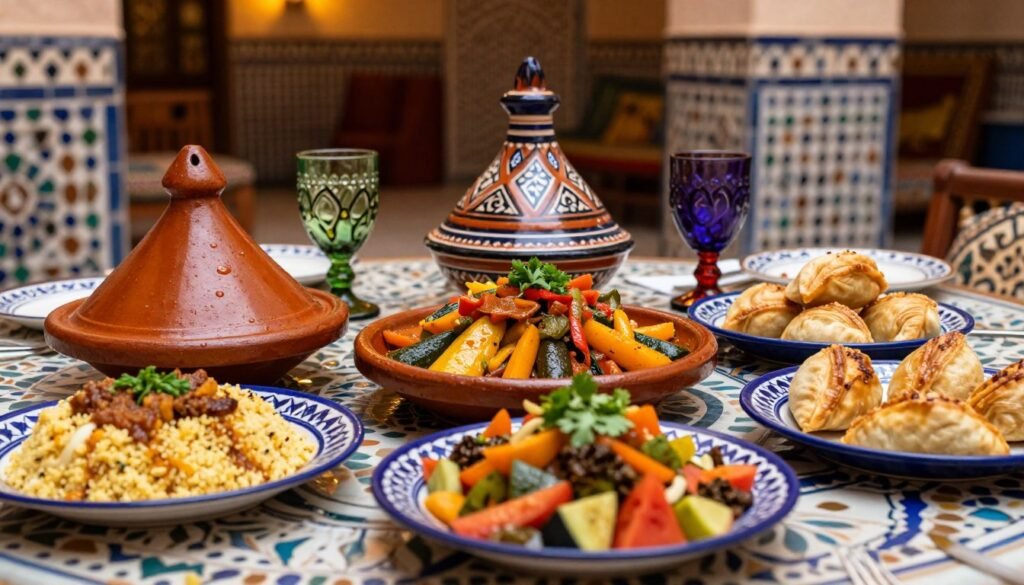
The Cultural Significance of Moroccan Food
In Morocco, food is key in cultural and social events. Cooking and sharing meals show hospitality and generosity. It reflects the country’s values.
Regional Variations in Moroccan Cooking
Moroccan cuisine changes a lot from one region to another. Coastal, mountain, and desert areas each have their own ingredients and cooking styles. This variety makes Moroccan food rich and diverse.
Essential Moroccan Spices and Ingredients
Moroccan cooking is all about vibrant spices and special ingredients. It’s a mix of flavors that tell the story of Morocco’s culture.
The Moroccan Spice Cabinet
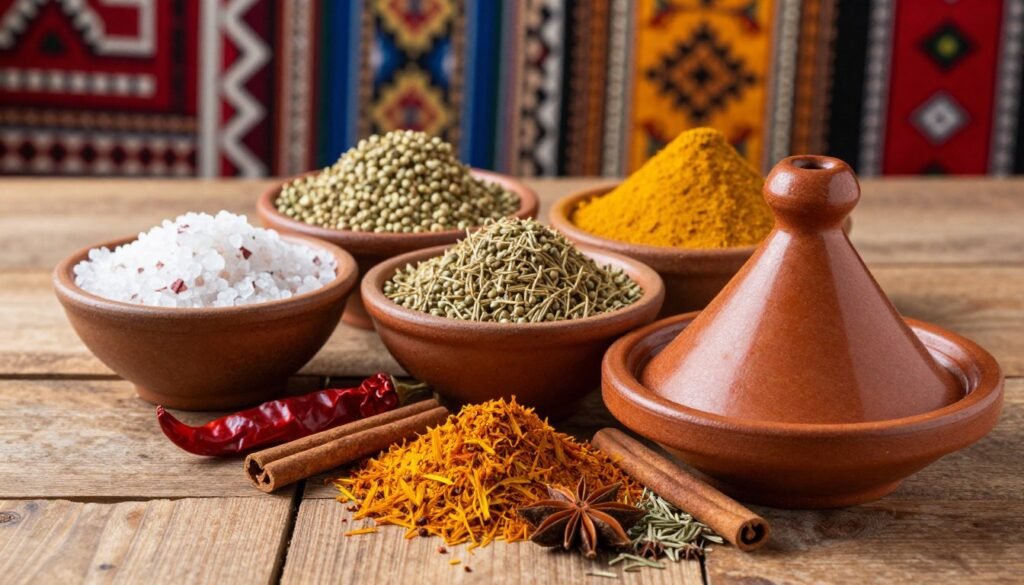
A Moroccan spice cabinet is full of amazing smells and tastes. It’s where you find the spices that make Moroccan food so unique.
Cumin, Coriander, and Cinnamon
Cumin, coriander, and cinnamon are key in Moroccan cooking. They mix together to create the rich flavors of Moroccan dishes.
Saffron, Turmeric, and Paprika
Saffron adds a luxurious touch to tagines and couscous. Turmeric and paprika bring out the vibrant colors and earthy tastes in many recipes.
Fresh and Preserved Ingredients
Moroccan cooking also uses fresh and preserved ingredients. These add a bright and complex taste to dishes.
Preserved Lemons
Preserved lemons are a key ingredient in Moroccan food. They add a salty, tangy flavor to tagines and salads.
Olives and Olive Oil
Olives and olive oil are used a lot in Moroccan cooking. They bring richness and depth to many dishes.
Where to Source Authentic Ingredients in the US
Finding real Moroccan ingredients in the US can be hard. But, there are a few places to look. Specialty stores and online shops often have Moroccan spices and ingredients.
| Ingredient | Common Sources |
|---|---|
| Preserved Lemons | Middle Eastern or North African grocery stores, online retailers |
| Ras el Hanout | Specialty spice stores, online spice merchants |
| Argania Oil | Health food stores, specialty grocery stores, online |
Tools and Equipment for Modern Moroccan Cooking
Getting into Moroccan cooking means learning about both old and new tools. Moroccan food is known for its deep flavors and smells. These come from special cooking tools and methods.
Traditional Tools: Tagines, Couscoussiers, and More
Traditional Moroccan cooking uses tools passed down for centuries. The tagine, a clay pot with a conical lid, is key. It’s used for slow-cooking stews, a hallmark of Moroccan dishes. The couscoussier, a steamer, is also crucial for making couscous, a mainstay in Moroccan meals.
Chef Fatima Zahra noted, “The tagine is more than a pot; it’s a sign of Moroccan welcome and culture.” These tools are not just useful; they hold deep cultural and traditional value.
Modern Alternatives for Traditional Equipment
While traditional tools are unmatched for authenticity, modern options can make cooking easier. For those without or preferring not to use clay tagines, there are modern substitutes.
Using Dutch Ovens and Slow Cookers
Dutch ovens and slow cookers mimic the slow-cooking of a tagine. They offer a similar cooking environment for stews and braises, making them great for modern kitchens.
Food Processors and Spice Grinders
Preparing Moroccan dishes often means grinding spices and processing ingredients. Food processors and spice grinders cut down on prep time without losing the quality of the ingredients.
By mixing old techniques with new tools, home cooks can make authentic Moroccan dishes easily.
Understanding Modern Moroccan Cooking Techniques
Moroccan cooking is all about mixing flavors and textures. It’s about making dishes that are both rich and satisfying.
Key Methods in Moroccan Food Preparation
Moroccan cooking uses a few main methods. These include slow-cooking in tagines, steaming couscous, and frying in olive oil. Slow-cooking is crucial. It makes flavors blend and meats tender.
Balancing Flavors: Sweet, Savory, and Spicy
Moroccan food is known for its mix of sweet, savory, and spicy. This mix comes from ingredients like preserved lemons, olives, and spices. The goal is to find a balance that tastes great together.
Adapting Techniques for American Kitchens
It’s possible to use Moroccan cooking methods in American kitchens, but some tweaks are needed. For instance, a slow cooker can mimic a tagine. A steamer basket works for couscous. These changes help home cooks make real Moroccan dishes.
Creating Authentic Moroccan Spice Blends at Home
Making authentic Moroccan spice blends at home is a journey into Moroccan cuisine’s heart. These blends are key to Moroccan dishes’ complex flavors.
Ras el Hanout: The King of Moroccan Spice Blends
Ras el Hanout, meaning “head of the shop,” is a mix of up to 30 spices. It’s great for many dishes, like tagines and couscous.
Step-by-Step Mixing Instructions
To make Ras el Hanout, mix spices like cumin, coriander, cinnamon, and ginger. The exact mix can change based on taste and region.
Customizing Your Blend
You can adjust Ras el Hanout’s spice mix to your liking. Some like more cumin, while others prefer a stronger cinnamon flavor.
Chermoula and Other Essential Marinades
Chermoula is key in Moroccan cooking, used for fish and meat marinades. It’s made with parsley, cilantro, garlic, lemon juice, and olive oil.
Storing and Preserving Your Spice Blends
Keep your spice blends fresh by storing them in airtight containers. Place them away from light and heat.
| Spice Blend | Main Ingredients | Usage |
|---|---|---|
| Ras el Hanout | Cumin, Coriander, Cinnamon, Ginger | Tagines, Couscous, Meat dishes |
| Chermoula | Parsley, Cilantro, Garlic, Lemon Juice, Olive Oil | Marinades for Fish and Meat |
Step-by-Step Guide to Perfect Couscous
To make perfect couscous, you need to know the traditional and modern ways of cooking. Couscous is a key part of Moroccan cuisine. It can make any meal better. First, pick the right couscous for your dish.
Traditional vs. Quick-Cook Methods
Traditional couscous cooking steams it over boiling water or stew. This adds lots of flavor. Quick-cook methods soak the couscous in hot water or broth and then fluff it with a fork.
The traditional method gives couscous a rich taste and texture. But, quick-cook methods are quicker and can still taste great with the right steps.
Flavoring Your Couscous
You can flavor couscous with herbs, spices, veggies, and fruits. The trick is to mix flavors well without making the dish too strong.
Herbs and Spices to Add
Herbs like parsley, cilantro, and mint add freshness. Spices like cumin, coriander, and cinnamon add warmth. Try different mixes to find your favorite taste.
Incorporating Vegetables and Fruits
Vegetables like bell peppers, carrots, and zucchini can be sautéed and mixed into couscous. Dried fruits like cranberries or apricots add a sweet touch to savory dishes.
Common Mistakes and How to Avoid Them
One mistake is overcooking couscous, making it mushy. To avoid this, watch the cooking time and fluff the couscous with a fork when it’s done.
Another mistake is not seasoning the cooking liquid. This makes couscous taste bland. Always season the water or broth before cooking the couscous.
| Cooking Method | Time | Flavor Profile |
|---|---|---|
| Traditional Steaming | 20-30 minutes | Rich, infused with stew flavors |
| Quick-Cook | 5-10 minutes | Light, can be flavored with broth or spices |
Mastering the Moroccan Tagine
Learning to cook with a tagine is a mix of old traditions and new ways. The tagine, with its special conical lid, is more than a pot. It’s a way to dive into the rich flavors of Moroccan cooking.
Preparing Your Tagine for First Use
Before you cook with your tagine, you need to get it ready. Start by seasoning it. Put water in the bottom, heat it up, then lower the heat and simmer for 15 minutes. Let it cool, wash it gently, and dry it. This makes sure your tagine is ready for its first use.
Step-by-Step Cooking Process
Cooking with a tagine is simple yet detailed. Begin by arranging your ingredients right. Start with onions and garlic at the bottom, then add your protein or veggies, and finish with sauces or liquids.
Layering Ingredients Properly
Layering is key for great flavors. Put tougher ingredients at the bottom to cook longer. Place more delicate items on top.
Temperature Control Techniques
Tagine cooking is all about slow cooking. Start with high heat, then lower it to a simmer. This method tenderizes food and blends flavors well.
Adapting Tagine Recipes for Modern Kitchens
While traditional tagine cooking is rewarding, modern tweaks make it easier. One way to update tagine recipes is by using a pressure cooker or Instant Pot.
Pressure Cooker and Instant Pot Adaptations
Pressure cookers or Instant Pots cut down cooking time. Layer your ingredients like in a traditional tagine. Then, follow the maker’s cooking time and pressure guidelines. This is great for tougher meats or when you’re short on time.
By using these methods and tweaks, you’ll get better at making Moroccan tagines. You’ll bring a bit of Morocco into your kitchen.
The Art of Modern Moroccan Cooking for Everyday Meals
Modern Moroccan cooking is more than just exotic spices and complex recipes. It’s about bringing Moroccan hospitality into your daily meals. With a few key techniques and ingredients, you can add rich Moroccan flavors to your cooking.
Time-Saving Techniques
Mastering time-saving techniques is key to making Moroccan cooking a daily part of your life. For example, making spice blends ahead of time can save a lot of time. Ras el hanout, a mix of spices, is a Moroccan staple. It can be made in big batches for the week.
- Prepare large batches of spice blends like Ras el hanout.
- Use pre-preserved lemons and olives to add depth to dishes quickly.
- Opt for quicker cooking methods like using a pressure cooker for tough cuts of meat.
Meal Prep Strategies for Moroccan Dishes
Meal prep is a great way to make Moroccan cooking fit into your busy schedule. Many Moroccan dishes, like tagines and stews, taste even better the next day. Cooking big batches on weekends and reheating them during the week is a smart move.
“The art of cooking is the ability to make people feel at home, and Moroccan cuisine, with its rich flavors and aromas, is very good at this.”
Fusion Approaches: Moroccan Meets American
Mixing Moroccan flavors with American cuisine can lead to tasty and unique dishes. For instance, adding Moroccan spices to American burgers or using preserved lemons in salads can create new flavors.
By combining traditional Moroccan cooking with modern conveniences, you can enjoy the best of both in your kitchen.
Essential Moroccan Bread and Pastry Recipes
Exploring Moroccan bread and pastry recipes opens a door to a world of rich culinary heritage. Moroccan cuisine is known for its diverse and flavorful breads and pastries. These are key to its culinary identity.
Khobz: Traditional Moroccan Bread
Khobz is a staple in Moroccan cuisine. It has a crusty exterior and a soft interior. It’s baked in a traditional oven or on a baking sheet.
Step-by-Step Baking Instructions
To bake Khobz, start by mixing flour, yeast, salt, and water. Form a dough. Let it rise, then shape into rounds and bake until golden.
No-Knead Variations
For a simpler approach, try a no-knead Khobz recipe. Mix ingredients and let the dough rest for several hours before baking.
Sweet Pastries and Cookies
Moroccan pastries are renowned for their sweetness and complexity. They often feature almonds and honey.
Almond-Based Treats
Almond-based pastries, such as ghriba, are popular in Morocco. They’re made with ground almonds, sugar, and eggs. Then, they’re baked to perfection.
| Pastry | Main Ingredients | Description |
|---|---|---|
| Khobz | Flour, Water, Yeast | Traditional Moroccan bread |
| Ghriba | Almonds, Sugar, Eggs | Sweet almond pastry |
Moroccan Salads and Appetizers for the Modern Table
Moroccan salads and appetizers bring a taste of North Africa to your table. They mix spices and ingredients in a unique way. These dishes are not only tasty but also versatile, great for any occasion.
Traditional Salad Varieties
Moroccan cuisine offers a variety of traditional salads. These are both healthy and delicious. Zaalouk and Moroccan carrot salad are two standout examples.
Zaalouk (Eggplant Salad)
Zaalouk is a rich eggplant salad. It’s made with cooked eggplant, tomatoes, garlic, and spices. It’s often served as a side or on bread.
Moroccan Carrot Salad
Moroccan carrot salad is a refreshing salad. It’s made with grated carrots, citrus juice, and spices. It’s great as a side or a light lunch.
Quick and Easy Moroccan Appetizers
Moroccan appetizers are perfect for parties. They offer a variety of flavors and textures. Phyllo-based finger foods are popular for their ease and elegance.
Phyllo-Based Finger Foods
Phyllo dough lets you make Moroccan-inspired appetizers. Try spinach and cheese triangles or meat-filled pastries. They’re ideal for parties or special events.
Adding Moroccan salads and appetizers to your meals brings North African flair. They can make any gathering more special.
Moroccan Main Dishes Made Simple
Moroccan cooking is all about making complex flavors simple and tasty. This section will look at some iconic Moroccan dishes. They are great for adding international flair to your meals.
Chicken with Preserved Lemon and Olives
Chicken with preserved lemon and olives is a favorite in Morocco. It mixes the tangy taste of preserved lemons with the salty flavor of olives. This creates a rich and savory sauce.
Step-by-Step Cooking Instructions
- Brown the chicken in a tagine or large pot with some olive oil.
- Add onions, garlic, ginger, and a blend of Moroccan spices.
- Incorporate preserved lemons and green olives, then simmer until the chicken is tender.
- Serve over couscous for a complete meal.
Vegetarian Options: Hearty Legume Dishes
Moroccan cuisine has many vegetarian dishes, focusing on legumes.
Chickpea and Lentil Tagines
These tagines are nutritious and full of flavor. They mix chickpeas or lentils with spices and vegetables. This makes for a healthy and tasty meal.
Seafood in Moroccan Cuisine
Morocco’s long coastline makes seafood a big part of its cuisine. Fish tagines are a favorite, offering a flavorful and healthy meal.
Fish Tagine with Chermoula
Fish tagines use fresh fish and chermoula, a herb-rich marinade. This adds freshness to the dish. Just layer the fish with chermoula in the tagine and cook until it’s flaky and tender.
These Moroccan dishes show how simple and rich Moroccan cuisine can be. They make it easy to enjoy Moroccan flavors at home.
Conclusion: Bringing Morocco to Your Kitchen
Exploring Moroccan cuisine shows us it’s easy to bring Moroccan cooking into our homes. By using traditional spices and cooking methods, we can enjoy Moroccan flavors in our kitchens. This makes Moroccan cuisine more than just food; it’s a way to connect with a rich culture.
Making Moroccan dishes in our kitchens is about more than cooking. It’s about sharing cultures and exploring new tastes. With the right tools and recipes, you can begin your Moroccan cooking adventure. Try out the spice blends, learn to cook couscous, and enjoy the famous tagines.
Embracing Moroccan cooking is a fun journey of discovery. With time, you’ll find these flavors fit right into your kitchen. Start with simple recipes, be bold, and enjoy bringing Morocco’s tastes into your home.