
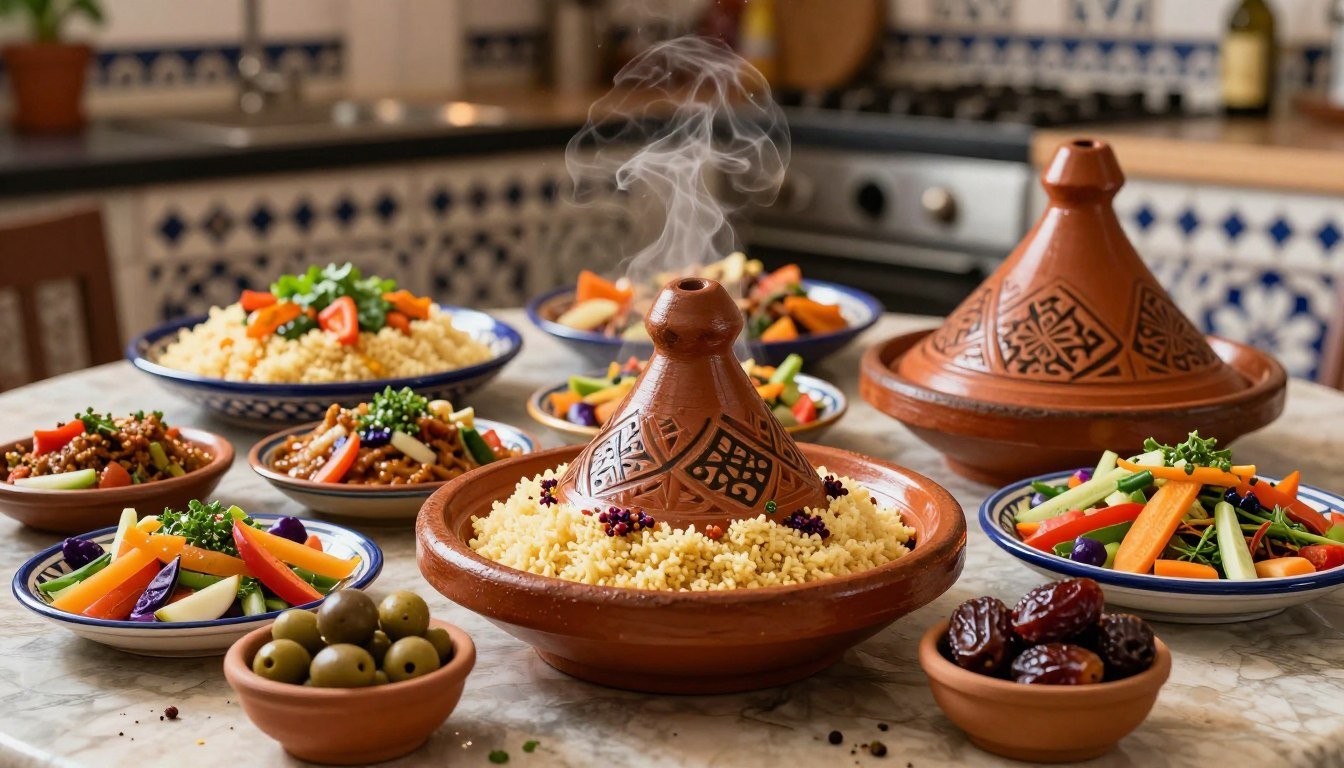
Start a journey through the lively tastes and smells of Moroccan cuisine. It’s a mix of Mediterranean, Arab, and Berber traditions. This guide makes it easy for beginners to get started.
Moroccan cooking techniques might look hard at first. But, by learning the basics and trying simple recipes, you can make tasty dishes easily.
Key Takeaways
- Discover the rich heritage and cultural significance of Moroccan cuisine.
- Learn basic cooking techniques to simplify the preparation of Moroccan dishes.
- Explore simple and authentic recipes perfect for beginners.
- Understand the importance of spices and herbs in Moroccan cooking.
- Get started with Moroccan cooking and make it a part of your culinary repertoire.
The Rich Heritage of Moroccan Cuisine
Moroccan cuisine is a mix of many cultures. It has a rich history that has shaped its flavors and traditions.
Historical Influences on Moroccan Food
Many cultures have shaped Moroccan cuisine. The Berber, Arab, and Mediterranean influences are key to its unique taste.
Berber, Arab, and Mediterranean Contributions
The Berber people introduced preserved lemons and olives. Arab traders brought spices like cumin and cinnamon. Mediterranean cultures added olive oil and cooking techniques.
French and Spanish Colonial Impact
The French and Spanish brought new ingredients and cooking methods. The French added pastries and baking techniques. The Spanish introduced citrus fruits and tomatoes.
Regional Variations in Moroccan Cooking
Moroccan cuisine changes a lot from one region to another. The country’s varied geography leads to different cooking styles.
Coastal vs. Inland Dishes
Coastal areas have lots of seafood. Inland areas focus on meat and grains. This is seen in the ingredients and cooking methods used.
Desert and Mountain Culinary Traditions
Deserts have hearty stews, while mountains use wild herbs and game meats. These differences make Moroccan cuisine rich and varied.
| Region | Key Ingredients | Cooking Methods |
|---|---|---|
| Coastal | Seafood, olives, citrus | Grilling, frying |
| Inland | Meat, grains, spices | Stewing, slow cooking |
| Desert | Dried fruits, nuts, preserved meats | Slow cooking, stewing |
| Mountain | Wild herbs, game meats, root vegetables | Stewing, roasting |

Essential Spices for Moroccan Cooking
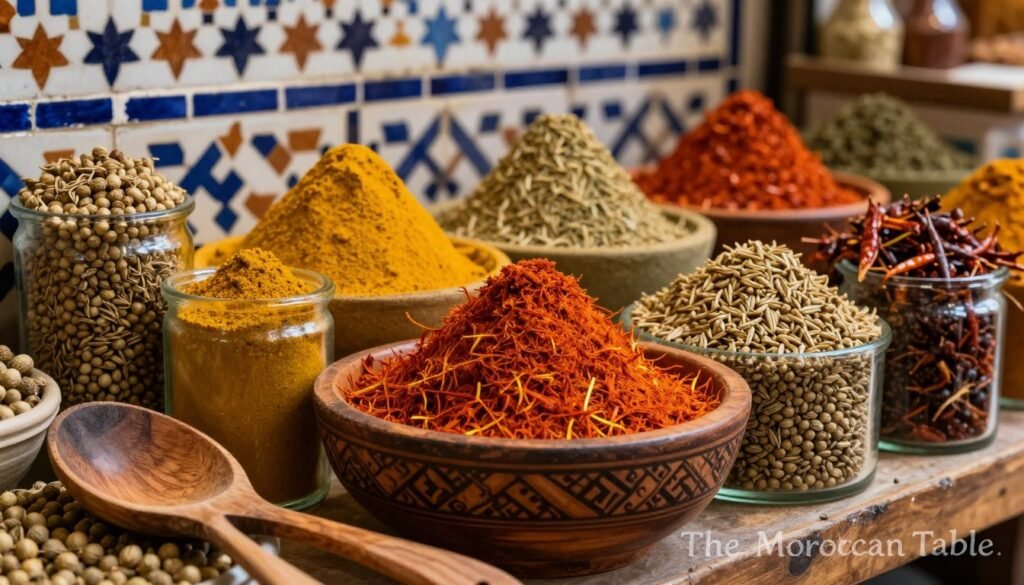
To cook Moroccan dishes right, you need to know the key spices. Moroccan cooking is all about a mix of spices. These spices give dishes their rich flavors and smells.
Must-Have Spices for Your Pantry
Having a good spice pantry is essential for Moroccan cooking. Here are the must-haves:
Cumin, Coriander, and Cinnamon
- Cumin brings warmth and depth to tagines and stews.
- Coriander, the seed of cilantro, adds a sweet and citrusy taste.
- Cinnamon adds a sweet and spicy flavor to both savory and sweet dishes.
Saffron, Turmeric, and Paprika
- Saffron is known for its luxurious and distinct flavor, used in many Moroccan dishes.
- Turmeric gives a bright yellow color and a slightly bitter, earthy taste.
- Paprika adds a smoky sweetness and is often mixed with other spices.
Understanding Ras el Hanout
Ras el Hanout, meaning “head of the shop,” is a spice mix that changes with recipes or vendors. It’s a key ingredient in many Moroccan dishes.
Store-Bought vs. Homemade Blends
While store-bought Ras el Hanout is easy, making your own lets you customize and keep it fresh.
Simple Ras el Hanout Recipe
To make a simple Ras el Hanout blend, mix cumin, coriander, cinnamon, turmeric, and paprika in the right amounts. Adjust to your liking.
How to Store and Maintain Spice Freshness
Keeping spices fresh is important. Store them in a cool, dark place in airtight containers.
Key Ingredients in Traditional Moroccan Dishes
Moroccan cooking starts with key ingredients. These include grains, legumes, meats, and produce. They help make rich and varied dishes.
Staple Grains and Legumes
Grains and legumes are crucial in Moroccan cooking. They add texture and nutrition to dishes.
Couscous, Bulgur, and Rice
Couscous is a standout grain in Morocco, often paired with veggies and meat. Bulgur and rice also feature in many recipes, enriching the cuisine.
Chickpeas and Lentils
Chickpeas and lentils are staples in Moroccan stews and salads. They offer protein and fiber.
Meats Commonly Used in Moroccan Cooking
Meat is a big deal in Moroccan food. Lamb and chicken are the top choices.
Lamb and Chicken Preparation
Lamb is key in traditional tagines. Chicken, on the other hand, is found in many dishes, like tagines and salads.
Fruits and Vegetables in Moroccan Cuisine
Fruits and veggies bring flavor and health to Moroccan meals. Preserved lemons, olives, and dried fruits are standout features.
Preserved Lemons and Olives
Preserved lemons and olives add a salty, tangy taste to Moroccan dishes.
Dried Fruits in Savory Dishes
Dried fruits like apricots and prunes add sweetness to savory tagines. They offer a nice contrast.
| Ingredient | Common Use |
|---|---|
| Couscous | Main dish with vegetables and meat |
| Chickpeas | Stews and salads |
| Lamb | Traditional tagines |
| Preserved Lemons | Adding tangy flavor |
Essential Cookware for Moroccan Recipes
The right cookware is key for making authentic Moroccan dishes. Moroccan cooking is known for its rich flavors and slow-cooked meals. These are often made in traditional cooking vessels.
The Tagine: Purpose and Usage
A tagine is a clay or ceramic pot with a special conical lid. It’s used for slow-cooking stews and other dishes. The design of the tagine spreads heat and steams evenly, keeping flavors in.
Both clay and ceramic tagines are used in Moroccan cooking. Clay tagines give a rustic, earthy flavor. Ceramic tagines are more durable and easy to clean.
Seasoning Your New Tagine
Before using a new tagine, season it first. Apply oil to the inside and heat it slowly to avoid cracking. Seasoning makes the tagine non-stick and improves flavor.
Alternatives to Traditional Cookware
While traditional tagines are best for Moroccan cooking, Dutch ovens and slow cookers work too. They offer similar slow-cooking and are handy for modern kitchens.
Dutch Ovens and Slow Cookers
Dutch ovens are thick, heavy pots that cook evenly. Slow cookers, or crock pots, cook unattended for hours. They’re great for busy homes.
| Cookware | Features | Usage |
|---|---|---|
| Tagine | Clay or ceramic, conical lid | Slow-cooking stews and dishes |
| Dutch Oven | Heavy, thick-walled | Slow-cooking, braising |
| Slow Cooker | Electric, unattended cooking | Long-duration cooking, stews, and soups |
Other Useful Kitchen Tools
Other tools are key for Moroccan cooking. A mortar and pestle is used for grinding spices and herbs. It releases their flavors and aromas.
Mortar and Pestle for Spice Grinding
A mortar and pestle is essential for grinding spices. It’s a crucial step in making many Moroccan dishes. This tool enhances the taste of the meal by releasing spice oils and flavors.
Moroccan Cooking for Beginners: Basic Techniques
Learning Moroccan cooking starts with basic techniques. It’s all about mixing flavors and cooking methods. These methods highlight the best in the ingredients.
Layering Flavors: The Foundation of Moroccan Cooking
Layering flavors is key in Moroccan cooking. It begins with a good onion and garlic base. Sautéing onions and garlic until they’re soft and fragrant sets the dish’s flavor.
Proper Onion and Garlic Base
Start by finely chopping onions and garlic. Then, sauté them in oil until they’re soft and lightly browned. This makes the onions sweet and the garlic strong, creating a rich base.
When to Add Different Spices
Knowing when to add spices is important. Adding spices at the right moment lets their flavors bloom. Ground spices are best added towards the end to keep their flavor strong.
Slow Cooking Methods
Slow cooking is a key technique in Moroccan cooking, like in tagines. Low and slow temperature control blends flavors and tenderizes meat.
Low and Slow Temperature Control
Use a tagine or slow cooker for low heat cooking. This method ensures flavors are fully developed and ingredients are cooked right.
Proper Spice Blooming Techniques
Spice blooming boosts spice flavors. Toast whole spices to release their oils and intensify their taste. Also, infusing oils with flavor by heating them with spices or herbs adds depth.
Toasting Whole Spices
To toast whole spices, heat a dry pan over medium heat. Add the spices and stir until fragrant. This enhances their flavor and aroma.
Infusing Oils with Flavor
Infusing oils means gently heating them with spices or herbs. This lets the oil soak up flavors, ready for cooking.
Mastering Moroccan Tagine Dishes
Tagine is a dish named after the earthenware pot it’s cooked in. It’s a key part of Moroccan cooking. This stew is famous for its rich spices, tender meat or veggies, and slow-cooked flavors.
Step-by-Step Chicken Tagine Recipe
Creating a classic chicken tagine takes a few important steps. First, you need to pick and prepare your ingredients carefully.
Ingredient Preparation
To make a traditional chicken tagine, you’ll need chicken thighs, onions, garlic, and ginger. You’ll also need spices like cumin, coriander, and cinnamon. Marinating the chicken in olive oil, lemon juice, and spices is key for deep flavors.
Cooking Process and Timing
Next, the chicken is slow-cooked in a tagine pot with the marinade, onions, and spices. The slow cooking lets the flavors blend, making a rich stew. It usually takes about an hour, until the chicken is tender and the sauce thickens.
Vegetarian Tagine Options
If you prefer no meat, try a seven-vegetable tagine. It’s filled with carrots, zucchini, and bell peppers, all cooked in a flavorful broth.
Seven-Vegetable Tagine Recipe
To make it, layer the veggies and spices in the tagine pot. Then, cook it over low heat. It’s important to balance the flavors and make sure the veggies are tender.
Common Mistakes to Avoid
When cooking tagine, there are a few mistakes to watch out for. Two big ones are managing the temperature and getting the liquid right.
Temperature Management
Keeping the heat low and steady is crucial. High heat can make the meat tough and the veggies undercooked.
Liquid Ratios and Reduction
Getting the liquid right is also key. Too much makes the stew watery, too little can burn the ingredients. Adjusting the seasoning and reducing the sauce is important for the right consistency.
By following these tips and avoiding common mistakes, you can master Moroccan tagine dishes. Whether you choose chicken or veggies, the secret to a great tagine is slow cooking and balancing flavors.
Perfecting Moroccan Couscous
The secret to perfect Moroccan couscous is knowing how to prepare it. It’s a versatile dish that can be a side or main course. Its mild flavor is great for many ingredients.
Traditional Couscous Preparation
Traditional couscous is steamed over a flavorful broth. This method infuses the grains with rich aromas. It takes skill and patience but is worth it.
Steaming vs. Quick-Soak Methods
Steaming is the traditional way, using simmering vegetables or meat broth. Quick-soak is faster but might not be as fluffy.
Quick and Easy Couscous Methods
For those in a hurry, quick couscous methods exist. Instant couscous is a fast option.
Instant Couscous Techniques
To make instant couscous, pour it into a bowl with hot water or broth. Cover and wait a few minutes. Fluff it with a fork to separate the grains.
Flavorful Couscous Variations
Couscous can be flavored in many ways. It’s great for sweet, savory, and refreshing dishes.
Sweet and Savory Couscous Recipes
Add dried fruits, nuts, and cinnamon for a sweet and savory dish. It’s perfect with grilled meats or veggies.
Couscous Salad for Summer
A couscous salad with veggies, herbs, and tangy dressing is refreshing.
Try different ingredients and flavors to find your favorite Moroccan couscous way.
Delicious Moroccan Appetizers and Salads
Exploring Moroccan appetizers and salads reveals a mix of spices and fresh ingredients. These elements excite the taste buds.
Simple Zaalouk Recipe (Eggplant Dip)
Zaalouk is a beloved Moroccan eggplant dip. It’s cooked with eggplant, tomatoes, garlic, and spices.
Roasting vs. Stovetop Methods
Roasting eggplant can add flavor, but stovetop cooking is quicker. The choice depends on your preference and time.
Moroccan Carrot Salad
Moroccan carrot salad is a cool side dish. It mixes cooked carrots with spices, citrus, and sometimes nuts or raisins.
Balancing Sweet and Spicy Flavors
The secret to a great Moroccan carrot salad is balancing sweet and spicy. Adjust spices like cumin and paprika, and add fresh citrus juice.
Bread and Dipping Options
No Moroccan meal is complete without bread. Khobz, a traditional Moroccan bread, is great for dipping into Zaalouk or olive oil.
Easy Khobz Bread Recipe
Making Khobz bread at home is easy. You need flour, yeast, water, salt, and sometimes olive oil.
| Ingredient | Quantity | Notes |
|---|---|---|
| Flour | 2 cups | All-purpose flour |
| Yeast | 1 tsp | Active dry yeast |
| Water | 1 cup | Warm water |
Sweet Treats: Moroccan Desserts
Explore the sweet side of Morocco, where desserts are filled with unique spices and flavors. These treats mix rich ingredients with cooking techniques passed down through generations.
Easy Moroccan Cookies Recipe
Moroccan cookies, like Ghoriba, are a big hit in Moroccan baking. Ghoriba is a traditional shortbread cookie that’s easy to make and needs just a few ingredients.
Ghoriba (Moroccan Shortbread)
To make Ghoriba, you need butter, sugar, flour, and a bit of vanilla. The secret to great Ghoriba is not to overmix the dough. This keeps the cookies soft and tender.
Fruit-Based Desserts
Moroccan desserts also feature a lot of fruit-based treats. One favorite is the Orange and Cinnamon Dessert. It mixes the zest of orange with cinnamon’s warmth.
Orange and Cinnamon Dessert
This dessert layers orange slices with cinnamon syrup and toasted almonds on top. It’s a simple yet elegant treat for any event.
The Art of Moroccan Mint Tea
No talk of Moroccan sweets is complete without Moroccan Mint Tea. This refreshing drink is key to Moroccan hospitality.
Proper Tea Service Technique
Serving Moroccan Mint Tea has its own special way. It involves pouring the tea high up to make a frothy top. This is as much about the look as the taste.
Sweetness Levels and Variations
You can adjust the sweetness of Moroccan Mint Tea to your liking. Some like it very sweet, while others prefer it less so. You can also try different teas or add lemon or herbs for a twist.
Creating a Complete Moroccan Meal
Making a Moroccan meal is more than cooking dishes. It’s about creating an experience. Moroccan food is known for its rich flavors and smells. But the real magic happens in how it’s presented and the culture it’s shared in.
Menu Planning for Different Occasions
Planning your menu is key for a Moroccan meal. The type of event decides the menu’s complexity and size.
Everyday Family Meals
For daily meals, keep it simple. Try Khobz (Moroccan bread) with olive oil and spices. Or a hearty Tagine with veggies and couscous.
Special Celebration Menus
For big events, the menu gets fancier. You might see B’stilla (a savory pie) and Merguez (spicy sausage). These dishes come with many salads and couscous.
Traditional Serving Methods
Moroccan meals are shared with everyone. This makes dining a social event.
Communal Eating Etiquette
When eating Moroccan, use your right hand. The left hand is seen as unclean. Meals are served on big trays or tablecloths. Everyone gathers around.
“The table is a meeting place, a gathering of family and friends, where love and warmth are shared.” – A Moroccan proverb
Adapting Portion Sizes for American Households
Adjusting Moroccan recipes for American homes means changing portion sizes and ingredients.
Scaling Recipes Up and Down
To adjust recipes, think about the number of guests and the event. For big groups, multiply ingredients. For small groups, halve or quarter the recipe.
| Dish | Servings | Scaling Factor |
|---|---|---|
| Chicken Tagine | 4-6 | 1.5 for 6-8 people |
| Couscous | 2 cups cooked | 1 cup per 2 people |
Health Benefits of Moroccan Cuisine
Moroccan cuisine focuses on whole foods and spices, offering many health benefits. The nutritional value of its key ingredients is key to these benefits.
Nutritional Value of Key Ingredients
Moroccan dishes are full of antioxidants. This is thanks to spices like cumin, coriander, and turmeric.
Antioxidant-Rich Spices
Spices like ginger and cinnamon add flavor and are rich in antioxidants. They help improve overall health.
Balanced Protein and Vegetable Combinations
Traditional Moroccan recipes mix protein sources like chicken or lamb with vegetables. This creates balanced and nutritious meals.
Mediterranean Diet Connections
Moroccan cuisine shares many principles with the Mediterranean diet. It focuses on heart-healthy cooking methods.
Heart-Healthy Cooking Methods
Slow cooking and grilling are common in Moroccan cooking. These methods help keep the nutritional value of ingredients.
Adapting Recipes for Dietary Restrictions
| Dietary Restriction | Adaptation Method |
|---|---|
| Gluten-Free | Use gluten-free couscous or substitute with quinoa |
| Vegetarian | Replace meat with legumes or tofu, and adjust spices |
Understanding the health benefits and adapting recipes helps everyone enjoy Moroccan cuisine. Its rich flavors and nutritional value are accessible to all.
Conclusion: Embracing the Joy of Moroccan Cooking
This beginner’s guide to Moroccan cooking has shown us a world of flavors. You now know the key spices, ingredients, and cooking methods. This knowledge lets you make delicious, authentic Moroccan dishes.
Moroccan cooking is special because it brings people together. It’s about the slow-cooked tagines and the bright tastes of couscous and salads. As you try new recipes, remember to be patient, practice, and enjoy mixing flavors.
Now, you’re ready to start your Moroccan cooking adventure. Enjoy finding new tastes and techniques. Don’t hesitate to change recipes to suit your taste. Moroccan cuisine is vast and welcoming, waiting for you to explore.